Picture
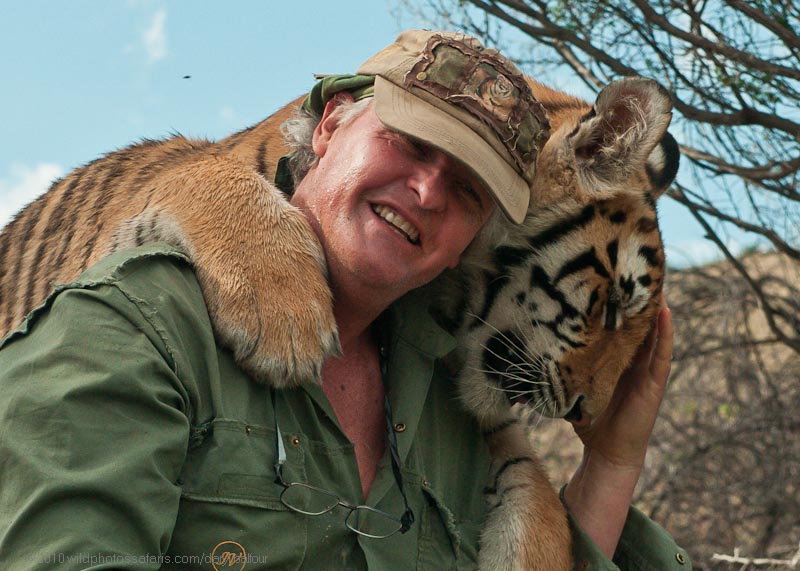
JV has a special close relationship with tigress Julie, developed over 12 years.
My good friend and colleague, John Varty - JV to those who know him - was seriously mauled by a wild tiger at his experimental tiger conservation project near the town of Philippolis in South Africa's Free State province last week.

JV is one of the most visionary conservationists, film-makers and individuals around. But by many ill-informed, misinformed, uninformed, envious, jealous or simply stupid people, JV is maligned, discredited and ignored. I have to admit that before I met and became close friends with the man, worked closely with him, and saw what he tries to do, I probably fell into that ill-informed category.

But John Varty, and his younger brother Dave, are two individuals who make a difference, and have made a difference. As young teenagers, the boys inherited their grandfather's hunting block in what is today the Sabi Sand Game Reserve, adjoining Kruger Park. While all around them were urging them to sell the property - all it had was a mud hut and some lean-to's - they had a vision. That vision turned into Londolozi Private Game Reserve, pioneering the concept of luxury and up-market non-consumptive (photographic) safaris. In my travels as a wildlife photographer, and also author of the safari lodge book Simply Safari, I have visited at least 200 leading safari camps and lodges around Africa. Londolozi stands out above most of them for the quality of its wildlife, the quality of the guides, and the quality of its accommodations.

It is no surprise that Nelson Mandela, after his release from 27 years in prison in South Africa, visited Londolozi. He hailed the reserve and the Varty's as visionaries, and proclaimed this to be a model that South Africa could follow. "There, I saw people of all races living in harmony amid the beauty that mother nature offers. Londolozi represents a model of the dream I cherish for the future of nature preservation in our country."

Today, if you speak to many of the black African neighbours to the Sabi Sand reserves, you will find disdain and hatred for many of the owners of these private reserves. For the Vartys however, there is widespread respect, love and affection.

John Varty has always had an affinity for the Big Cats. It was he who learned how to habituate leopards to close viewing by safari vehicles, and much of the great leopard viewing guests enjoy throughout the Sabi Sand reserves can probably be traced back to the original leopard JV habituated to accept vehicles in close proximity. The manner in which safari guides move their vehicles around leopards nowadays, can also be traced back to his early experiments and observations. It is a technique and protocol that today is taught at guide training schools around Africa. JV has raised orphan lions and leopards, habituating them back into a life in the wild. He was friends with the great George Adamson, and spent much time in Kenya's Kora Reserve with that legendary Lion Man of Africa.

In the 1990's JV learned of the plight of the tiger. Here is the most iconic wildlife species on the planet, better known and loved even than lions and elephants, and it is in a parlous state. Numbers in the wild have plummeted to the extent that in most of their previous range-states in Asia they are nigh extinct. Last year, the Year of the Tiger, India announced they had about 1,400 tigers left. They have not been seen in the wild in China for 30 years or more. In other countries where they once were plentiful, numbers are down to a few hundred, or mere handfuls. According to the latest published figures there are some 3000 - 3500 wild tigers left alive. This number in reality is probably far fewer…perhaps as little as 1500, or less.
According to JV, the reality is that many of the range state countries attach little if any prominence to tiger conservation. Parks are small, unfenced and poorly policed. Tigers are worth much more dead than alive. Tiger tourism, which could earn huge sums for conservation, is minuscule compared with African Big Five tourism.

When JV first learned of the situation pertaining to tigers he tried to offer his assistance, his experience and knowledge gained in developing one of the finest private game reserves in the world. He soon learned his offers were being ignored, that there was little will on the part of tiger range-state governments, that many of the multitude of tiger conservation organizations were more concerned with protecting their own niches, their own nests, than protecting the tiger. JV traveled to tiger conservation conferences around the world…using his own hard-earned funds rather than public donations like so many of the other conservationists gathered there. He soon concluded that for many at these conferences the most important item on the agenda was deciding where the next conference might be held. Rio, Cannes, Casablanca, LA?

So Varty decided to do things independently, spend his own money earned through his shares in Londolozi, his revenue from his documentary films, his big cats safaris, on buying land for tigers, fencing this land with an expensive fence good enough to keep tigers in and others out, stocking it with expensive game for the tigers to hunt, and breeding a self-sustaining population of wild, free-ranging tigers that could, perhaps one day, be used to repopulate tiger reserves elsewhere in the world.

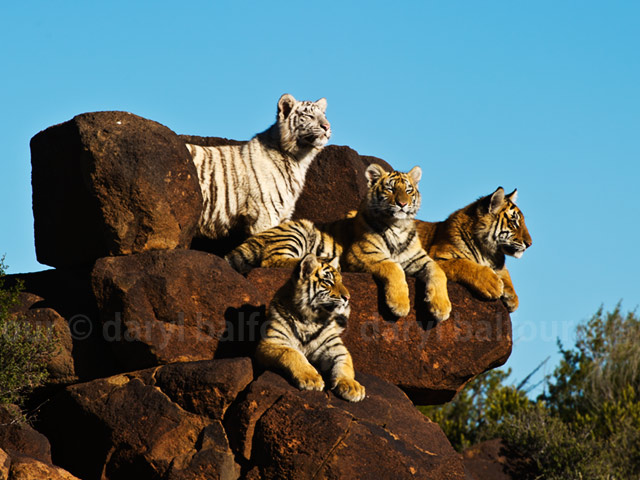
In 2000 he bought two zoo-bred tigers from Canada. His efforts to rehabilitate Ron & Julie became the subject of the documentary Living with Tigers, shown in more than 100 countries around the world. Julie has borne nine cubs since then. Ron was killed in a territorial fight with another tiger last year…they way most male tigers would die in the wild. JV also bought two other tigers to supplement his breeding stock, Shadow and Seatao. Today Tiger Canyons has 15 tigers…free ranging, able to hunt wild game. That's an almost 400% increase in the population…figures any other true tiger reserve can only dream about! Varty is currently looking to buy more land to establish a new tiger reserve in South Africa.

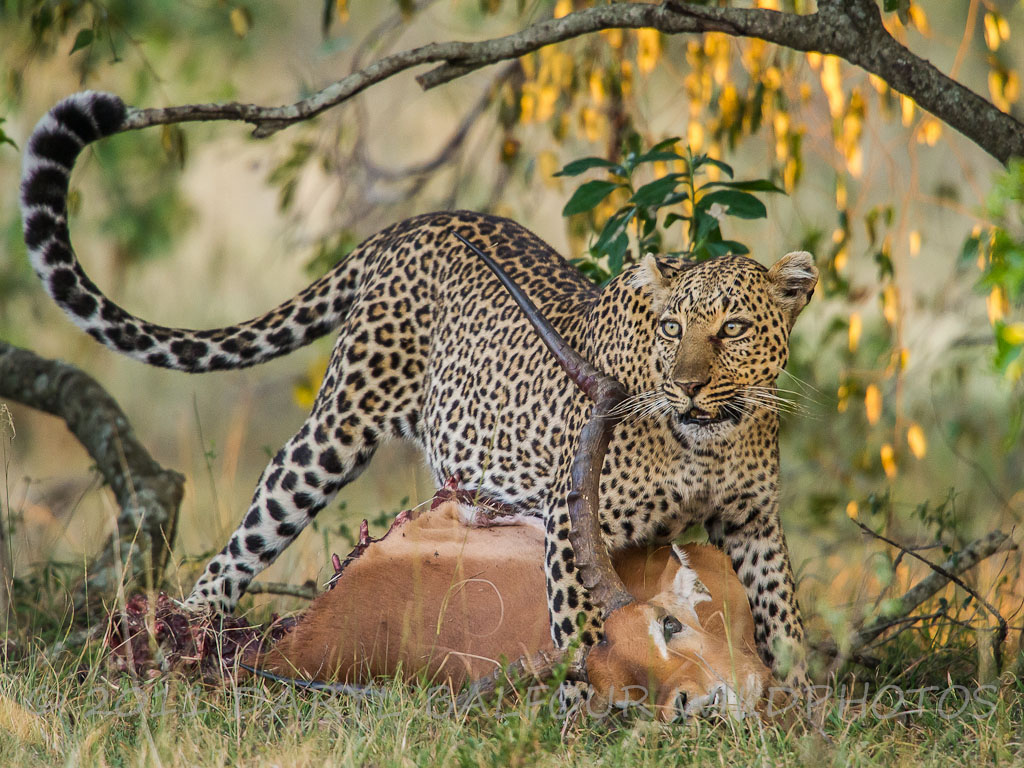
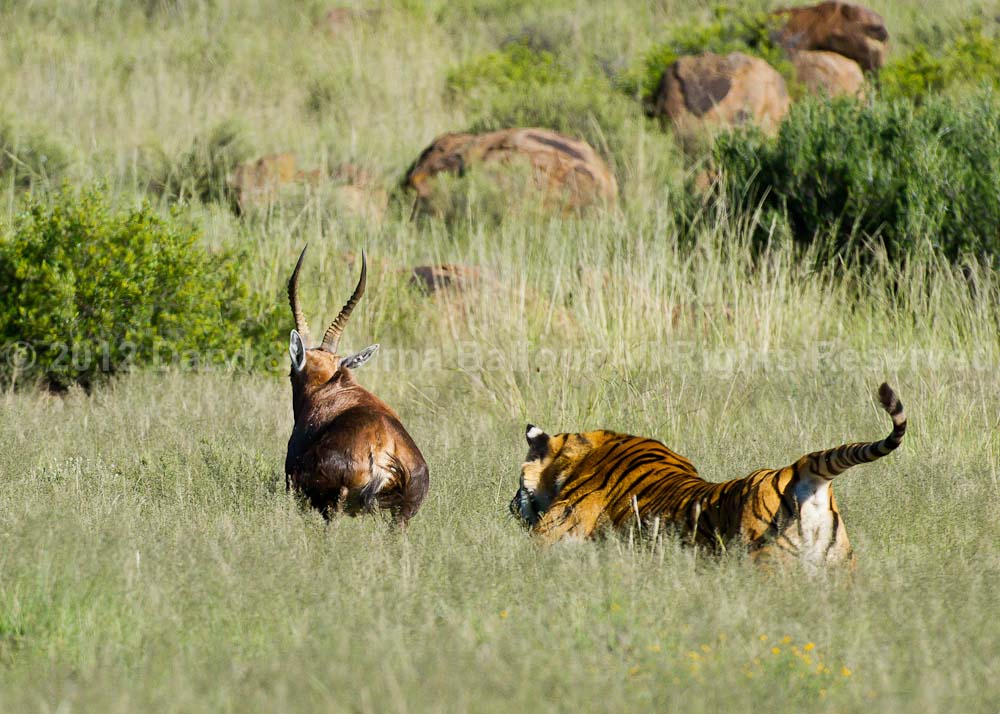
Of course, one of the criticisms from many who will denigrate JV is "tigers don't belong in Africa!" Or "tigers belong in Asia" and "you can't have lions and tigers and leopards and cheetahs together in one continent". It is hard to accept that tigers care where they live, or that future generations would prefer to see no tigers (in Asia) than wild tigers in Africa. Some fossil evidence indicates that tigers could once have roamed Africa. Lions, leopards and cheetah have called Asia home, along with tigers. Varty is not advocating nor trying to introduce tigers into established African game reserves alongside existing wildlife populations. His plan, his experiment, his proposal to all who will listen, is to buy failed farmlands and rehabilitate them under wildlife. Fence them and introduce tigers along with prey species. The tigers I have watched hunting springbok and blesbuck at Tiger Canyons don't seem fazed that these are not chital deer, sambar, gaur, nilgai or any other Asian species.

Another criticism I hear often regards JV's penchant for interacting with his subjects in his films. JV in fact pioneered the involvement and engagement of the film-maker (himself) in his documentaries 30 or more years ago. At the time it was ground-breaking, and subject to much comment (negative) from old school documentary makers. Today, however, most of the network channels won't accept films unless there is a human element, a degree of human interaction, a frisson of danger. JV has made more than 30 award-winning documentaries and one feature film, starring Brooke Shields, Martin Sheen and himself. Many if not most of them involve him along with the animals. The aforementioned Living with Tigers would not have been nearly as popular, would not have raised nearly as much interest in saving tigers, had there not been the human element. Julie, the "mother tiger" at Tiger Canyons today, retains an abiding trust in JV, a love if you will, much like your pet dog or cat shows love for you. JV has been with Julie for 12 years, yet she switches between wild tigress hunting for herself, raising wild young cubs, and cuddly companion with JV at will. It is something special to see…but JV himself will tell you that if Julie is not feeling "friendly" on any particular day she will let him know, and he stays away.

Perhaps one of the most idiotic and nonsensical criticisms is that "some experts feel that this is a money making venture by Varty in an attempt to earn money from the tourism industry." Apart from the fact that Tiger Canyons does not offer any of the trappings of the tourism industry offered, for example, by places such as Londolozi and that tourist visits there are basic, rudimentary and totally education based, JV's exact model for the conservation of tigers is just that: protect them in places where tourists can be assured of seeing tigers, where tigers can earn a share of the wildlife tourism dollar, where tigers can pay their way simply by being tigers. The Londolozi model, followed so successfully throughout Africa, makes perfect sense. If the Asian governments are not going to save tigers, let private individuals do it, on privately owned land, where they can fund tiger conservation through tourism. It is a concept followed not only by private landowners, but national parks throughout the world - wildlife needs to earn its keep. If it pays, it stays, is the oft-quoted refrain.

As I mentioned above, JV is a film-maker of huge acclaim. His documentaries are screened by the world's leading and most respected television channels, including National Geographic, Discovery and Animal Planet. Yes, JV uses his films of the tigers, and also lions and leopards and anything else, to fund his conservation projects, to buy land for tigers, to buy wild game for his tigers to hunt. Considering that a blesbuck can cost R1500 (about $200) each, a springbok more than R1000, a wildebeest R2000 or more...JV has a huge feed bill! Anyone who has visited JV at his home, has seen the car that he drives, the clothes he wears, will know that this is a man who does not spend much of his income on himself, or on the trappings of luxury.

Which brings us to the attack on JV. It was not perpetrated by Julie, nor by one of the two cubs he was forced to hand-rear when they were abandoned at birth (which are now living wild and free themselves). The tiger that attacked JV was a young male called Corbett, a son of Ron and Shadow now in its 4th year. JV was not out of the car with Corbett, he was not interacting with the tiger. In fact he did not see the tiger prior to being attacked from behind, and was simply closing a gate to an adjoining camp where Julie had been kept separated from the other tigers while she was in oestrus. (JV does not want her to breed more cubs until he has more land available.) Corbett, unseen behind the corrugated iron of an adjoining gate, lunged through with one powerful paw, hooked JV and pulled him into the gate, breaking three ribs with the impact. The tiger then began to savage him, though was unable to get its head through the gap in the gate to physically bite JV. Fortunately a film crew who were with JV managed to pull him free of the tiger's claws and rush him to a nearby doctor in Philippolis, prior to him being taken to hospital in Bloemfontein. JV spent almost 6 hours in theatre having his wounds attended to, followed by several days in the intensive care unit. The biggest danger now is the possibility of infection in the wounds, always a major threat with injuries from any of the big cats…or even your pet moggie at home.

JV, who recently published his autobiography Nine Lives, will no doubt return to his tigers and the other big cats he loves as soon as he is able. He is at pains to stress that Corbett was acting the way a wild male tiger would towards someone he saw as a male rival for an oestrus female. There is currently no suggestion that Corbett should be shot or euthanised. According to JV's ex, Gillian van Houten, who visited Tiger Canyons the day after the attack, Corbett was behaving normally when she saw him.

I wish JV a speedy recovery, and a speedy and successful return to his tigers and conservation projects. And I wish too that people who do not know the man, who have not visited his tiger project, would keep their mouths closed until they are better informed!


Last year, 2011, we ran our inaugural Big Cats Safari in Kenya's Maasai Mara National Reserve in conjunction with leading UK wildlife artist Pip McGarry and his wife Jan. So successful was it that Pip & Jan both decided immediately they would bring a second group in 2012, which we hosted once again in our luxury mobile tented camp at the same site just off the Burrungat Plains we use for our Wildebeest Migration Safaris each year from August - October.

After the fantastic sightings we had in 2011, we had some trepidation going into year two...would it live up to the previous year? Of course, the Mara is such an exceptional reserve for the Big Cats our concerns were only fleeting...but we are always striving for improvement. Well, we need not have worried! This was the feedback we recieved from Pip & Jan after the conclusion of the safari:

A huge thank you for a fabulous safari again this year. Last year no stone was left unturned in making our safari as brilliant as possible and I half wondered beforehand whether you could achieve the same high standard again. Well not only did you achieve it, you exceeded last year's trip hands down!   We had the most extra-ordinary sightings of wildlife and I know from conversations held on the way home that the rest of group had a fantastic time and they echoed my feelings about the safari.  So-oooo, this is probably going to upset the hell out of you, but can we look to do the same safari again next year? I think the safari stories and photos we took are going to whet many people's appetites, I am sure word is going around to other artists on Facebook and the like.

The safari started on the 15 minute drive from the Ol Kiombo airstrip to the camp -11 lions resting in the shade of some croton bushes. With several total safari virgins on this trip, the 15 minutes took a fair bit longer, but by the time we reached camp, Pip declared he'd already taken photos that would make two excellent new paintings once he returned home. Simon Knight had been on an African safari once before, and seen three lions his whole stay, so was happy that this new trip was already a success for him!

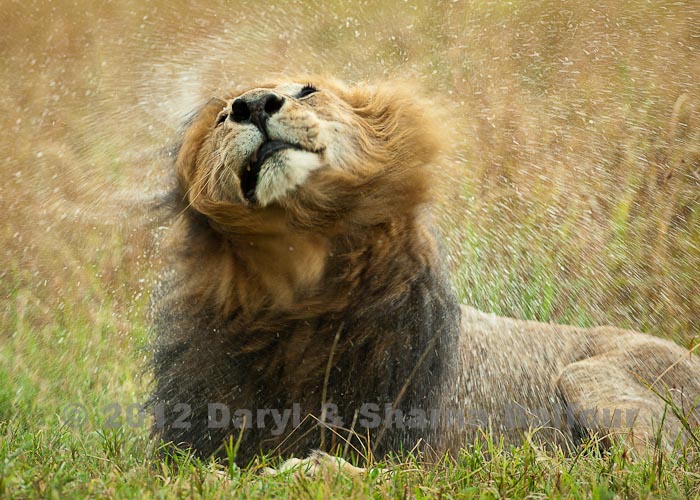
Settled into camp, lunched and unpacked, the afternoon gamedrive started in a sudden torrential downpour, but soon we found legendary Mara lion Notch, four lionesses including our favourite, Ugly Betty, and three cubs! The aftermath of the rain resulted in some great photo opportunities with wet lions and sodden but very playful cubs.

Picture
Notch, now into his mid-teens - old by wild lion standards - has featured in numerous wildlife documentaries shot in the Mara.
Picture
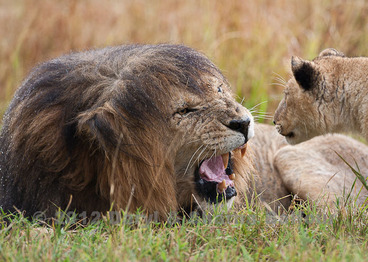
Notch cautions one of his offspring with a warning snarl!
Of course, legendary big male lions, and playful cubs, could not have set the safari off on a better course, and it was a happy, elated, group of safarigoers who gathered in the Mess Tent for an elegant candle-lit dinner later that evening.

The recurrent refrain was: "How are you going to better that tomorrow?"

Little did they - or we - know what was in store!

Fortunately the rain had cleared after dinner, so coffee and Amarula liqueurs at the fireside ended the day in true safari style. It is sad how so many safari camps and lodges nowadays have done away with the true campfire - if anything having a tiny glow in an artificial "dish" on a deck raised off Mother Earth.


Our tented safari camp is designed to recreate the essential elements of the original African safari, the way the early hunter-explorers did it...though nowadays we use trucks instead of teams of a hundred or more porters to move our camp around Kenya. Of course, we have introduced modern elements like en-suite flushing toilets in each tent, but maintained the traditional bucket showers brought to your tent on demand by your personal tent steward. While we still use the traditional parrafin or kerosent hurrican lanterns of old, we have introduced solar-powered lighting inside the sleeping tents, both as a safety and comfort thing, as well as to minimise our carbon footprint as much as possible.

All meals are taken under canvas (or under the stars if the weather allows) in our Mess Tent, at a long table elegantly lit by silver or crystal candelabra and a plethora of candles. The meals are prepared the traditional way - on a campfire, in a tin box over the coals used as an oven - by our trained safari chefs. They delight in preparing anything from eggplant parmigiano, courgette risotto, profiteroles, croissants, and tasty cakes to perfectly roasted joints of meat (and of course vegetarian, gluten free, lactose free & diabetic course for those who require them) in their rudimentary kitchen. The kitchen tour at the end of the safari always raises gasps of true amazement!
Picture
Elegant candle-lit dinner tables evoke the romance of a bye-gone era.
Picture
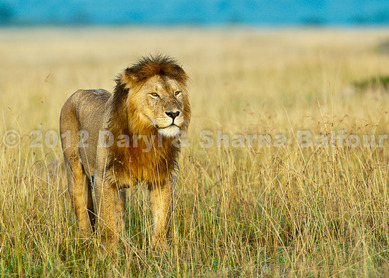
One of two nomadic males we found crossing the plains above camp.
Early on our first morning, only a short way out of camp, we found two nomadic male lions who we'd heard advertising their presence in the night. They were quite cautious,and moving steadily out of the area...which is currently held by Notch and his four adult, and spectacular, sons and nephews - a powerful coalition of five BIG male lions!

We followed the two boys as they headed towards the swollen Talek River, which was in full flood after the rains of the past several days. But then, to our amazement, they leaped into the muddy waters and swam powerfully to the other side!

Picture
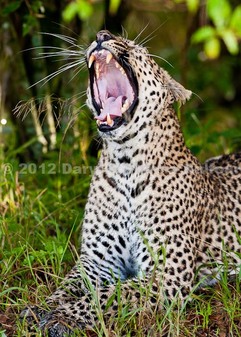
Olive yawns as we photograph from nearby.
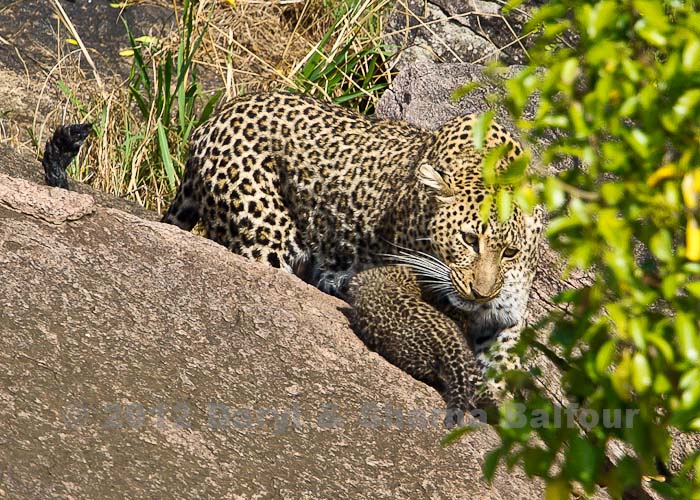
No sooner had we moved on from the swimming lions than Phil picked up the spoor (tracks) of an adult leopard. After following briefly, he came across the well-known leopardess Olive, who has been giving us great pleasure over recent years. We knew Olive had two tiny new cubs, and hoped to follow her to the den site. We could not have imagined where it was, and what we were about to witness.

With her face bloodied from a recent and fresh kill, we knew she would be heading back to the cubs, either to suckle them, or possibly get them to follow her back to the carcass.

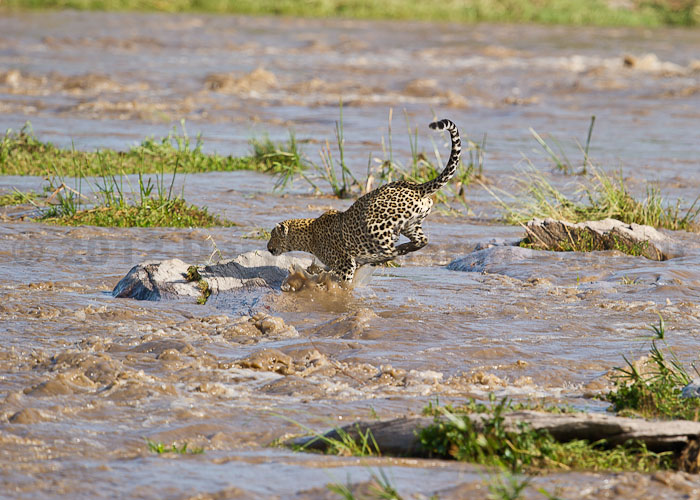
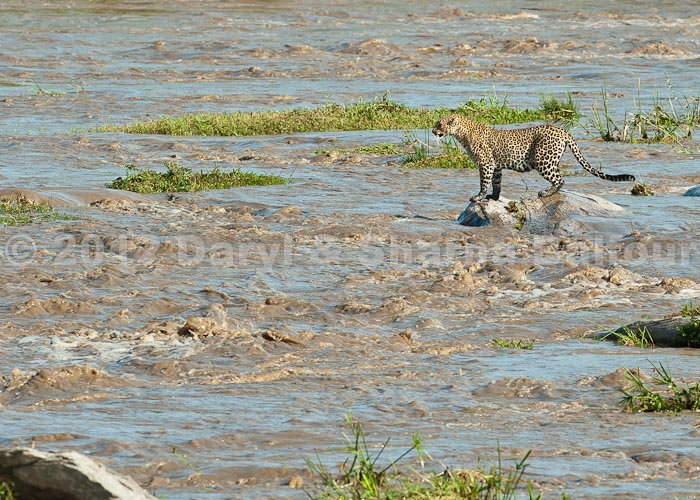
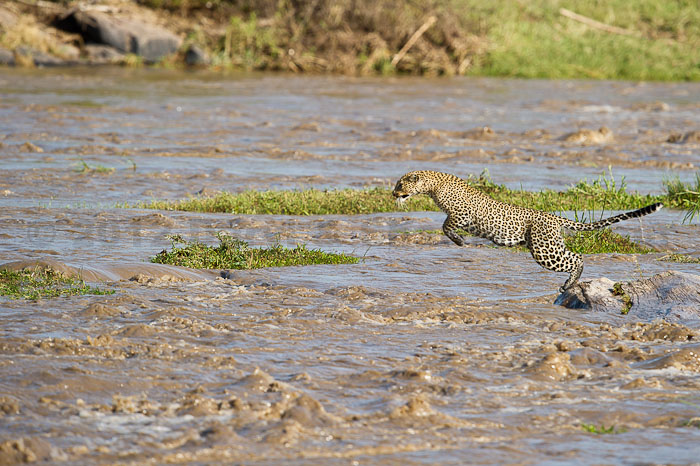
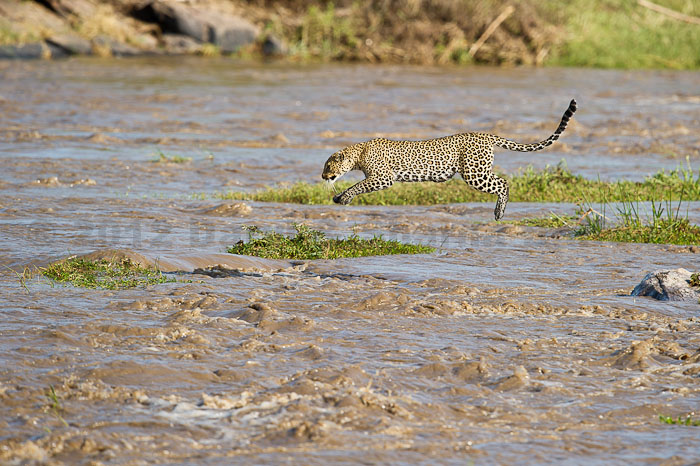
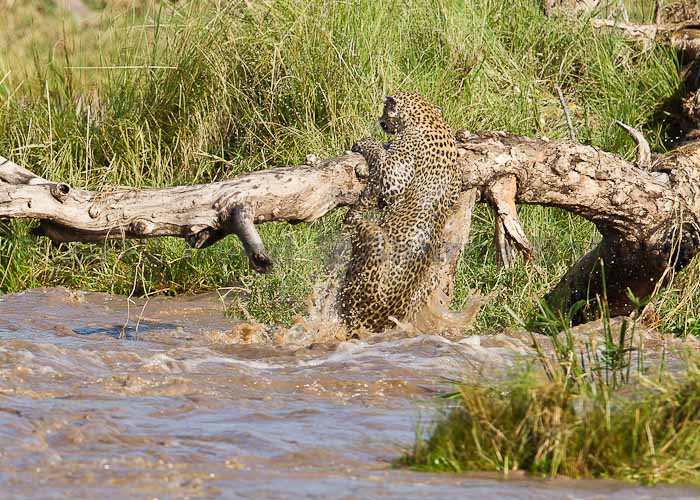
Then she moved down to the river banks, and sat gazing intently across the fast-flowing torrents. I chuckled to myself, and then commented: "Imagine if the cubs are the other side, and she decides to swim through the river!"

It was a raging flood...no cat, particularly a small female leopard, would do that!

Well, I've seen leopards leaping from rock to rock before, crossing rivers. But that was to save their feet from getting wet and the river was a bare trickle. For Olive to have entered the rushing waters of the flooded Talek River was a sight to behold. Incredible. Amazing. Wow, wow, wow! And then for her to bring her tiny cubs out into the open for all to see...that was something truly special.

So, how do we top the first afternoon's game drive? Hmmm...how do we top this one!?

More leopards? Done. A kill? Tomorrow! We can't do everything in one day...after all, you are here for a week!
Picture
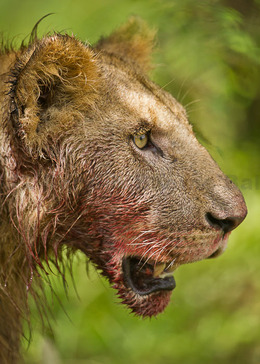
The bloodied face of a teenage lion cub after the feast.
Early the next morningI pick up lion tracks, and follow them to where we find the pride fast asleep in a thicket. Phil & Pierre, our other two safari guides, join us for a while, but we soon tire of watching sleeping lions lie (that's how they got their name...they are always "lion" around) and move out to watch some elephants and olive baboons.

Then suddenly the baboons start alarming, frantic, and the elephants trumpet loudly. The lions are hunting! We see a small herd of zebras flash by...lions in hot pursuit, and then its over...they've got one.

We move in closer as the lionesses throttle their victim. They have several young and teenaged cubs with them and so we sit watching the feeding frenzy, marvelling at the sounds...and also the fact that the Maasai Mara is really special in March as there are so few other tourists about. We spend the whole morning with the lions as they devour the zebra...and eventually one other vehicle arrives as we are departing! A "virus-free" sighting! Exactly as our leopard the previous day had been! The Mara in March is really great.

Picture
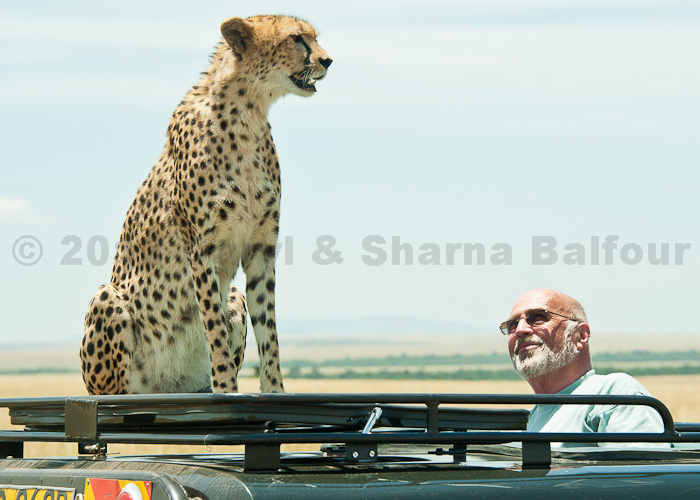
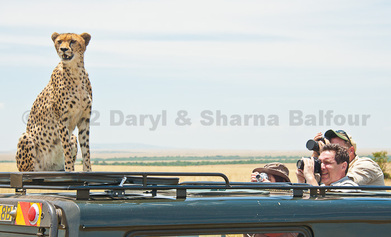
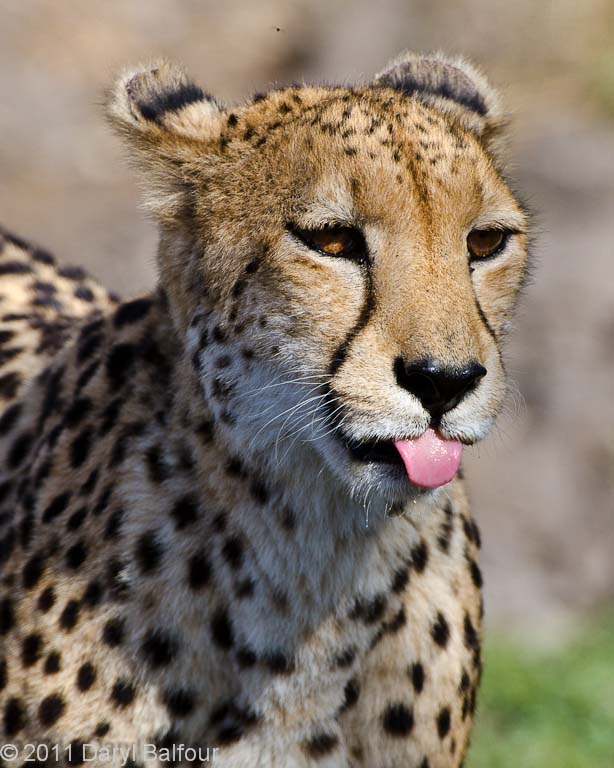
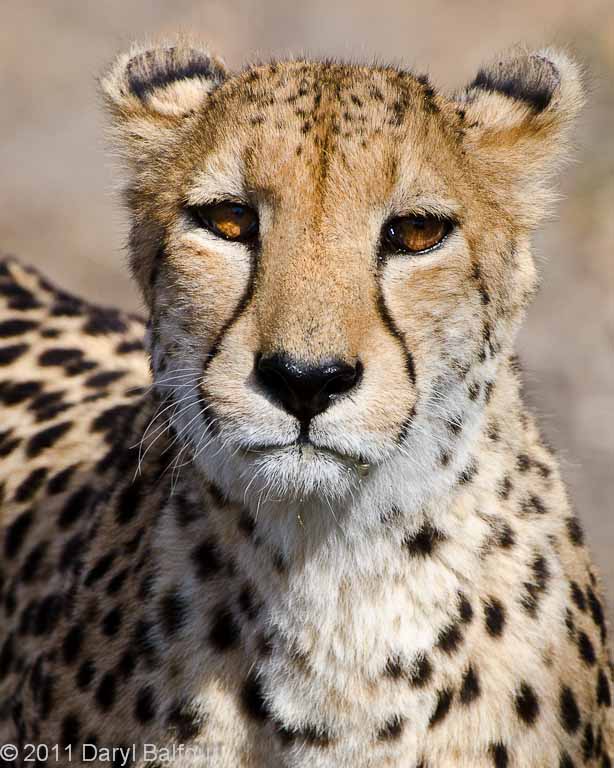
Colin Greenhowe of the UK gets an up close and personal introduction to a cheetah who couldn't care less!
By this stage we'd seen it all...apart from cheetah. Yes, I told you we can't do it all in one or two days. You're here for six. Cheetah next on the menu. How about a cheetah chase? OK. How about in your face, on top of the vehicle? Ha ha, yes!

Interestingly, when Phil found this female cheetah there were a few other vehicles with her, but after their obligatory five-minute stop they left, and we had her all to ourselves. (I guess the drivers were worried about missing lunch.) We sat with her for at least an hour, convinced she was hungry and keen to hunt one of the nearby Tomson's gazelles. I was also pretty sure she'd looked at the roof of my 4x4 a few times, with a look I've come to know after many years in the Mara. Not all, but several cheetahs there have grown up with and around vehicles, to the extent that they simply see a 4x4 (a green one, not a white minbus) as a high feature in the landscape, a vantage point from which to scour the plains for prey. Last October a female cheetah had jumped on my roof...and I was wondering if this might be the same one.

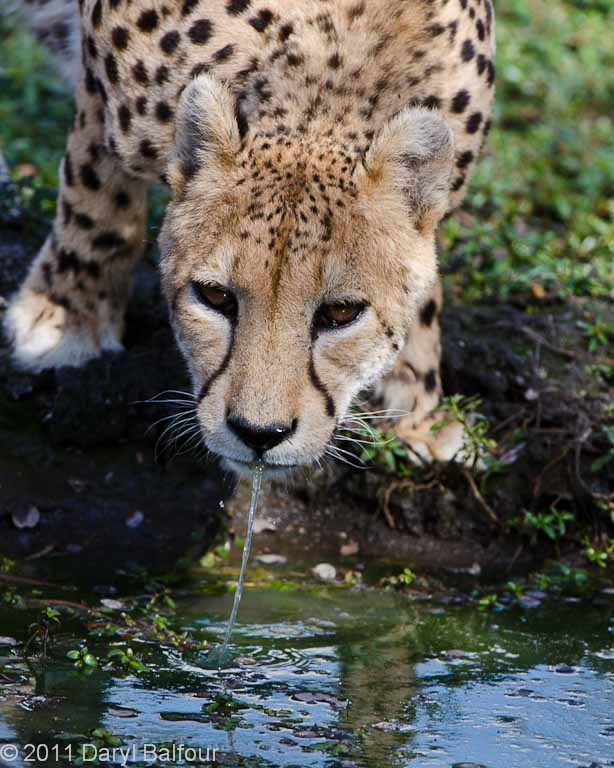
Sure enough though, after about an hour the cheetah decided to start a stalk of a lone Tommy on the hillside below us. Unfortunately for her, she was spotted by another Thomson's ram who gave the alarm, and after a short but speedy chase she gave up. Walking back up the hill, we positioned ourselves ahead of her near a pool of water, and sure enough she obliged by coming for a drink! Watch out for paintings from Pip and Natalie Mascall in the near future!

Then, without much further ado, she strolled between our vehicles and in one bound was on top of Phil's 4x4! Extreme low-angle close-up photos were the order of the day. Pip McGarry later declared this to be the greatest experience of all his many safaris in Africa. "We';ve seen it on BBC Big Cat Diary...now we've had it happen to us. Incredible!"
Picture


Pip & Jan McGarry, and guide Phil West, use the opportunity for close-up photography.

So, was that all we saw? Lions, leopards and cheetahs? Mmmm, not at all. The Mara in March is teeming with game, and very much deserted by tourists. Most game drives we had the plains and our sightings to ourselves. We saw huge herds of topi, gazelles and impala. Plenty of zebras (yes, watch for McGarry & Mascall zebra paintings soon too!) and giraffes, and many of the Mara's very tolerant elephants, including a magnificent bull in musth, who gave us some really close views and a great sniff of his pungent musth cologne! All in all it was an awesome safari. Pip McGarry has already booked out a week in 2013, but we have one more week available...join us!
 
 
Sharna and I recently returned from our inaugural Polar Bear safari to the polar bear capital of the world, Churchill, Manitoba, Canada. What a spectacular and dramatic event this turned out to be, with a particularly memorable finale we could all have done without when our lodgings, the Northern Nights Lodge, burned to the ground on our final (thank goodness) night in Churchill! More about that later!

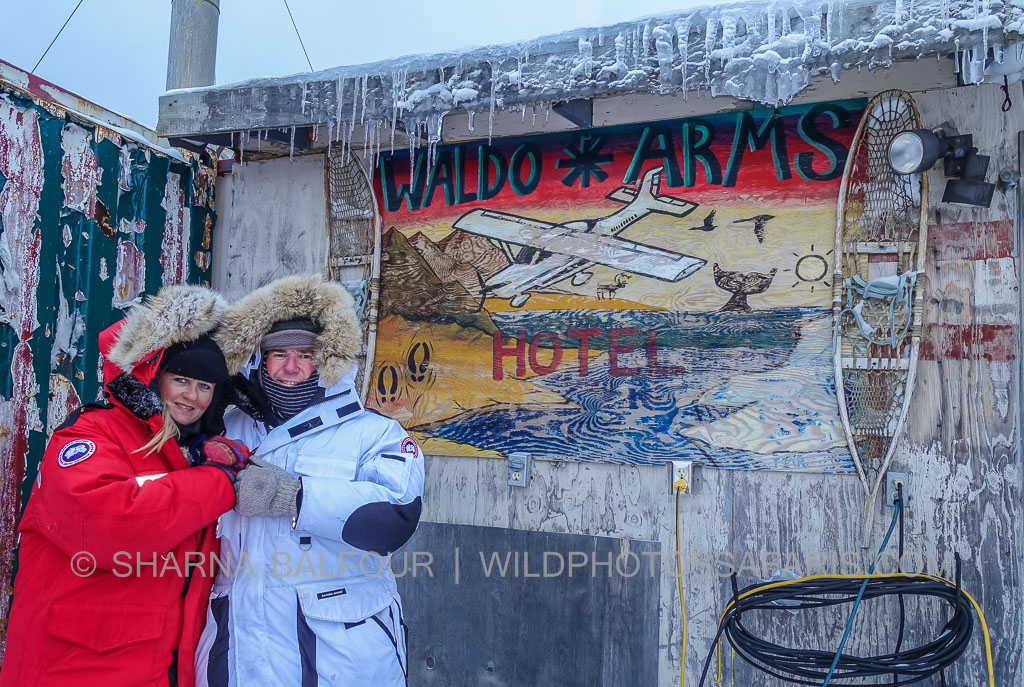
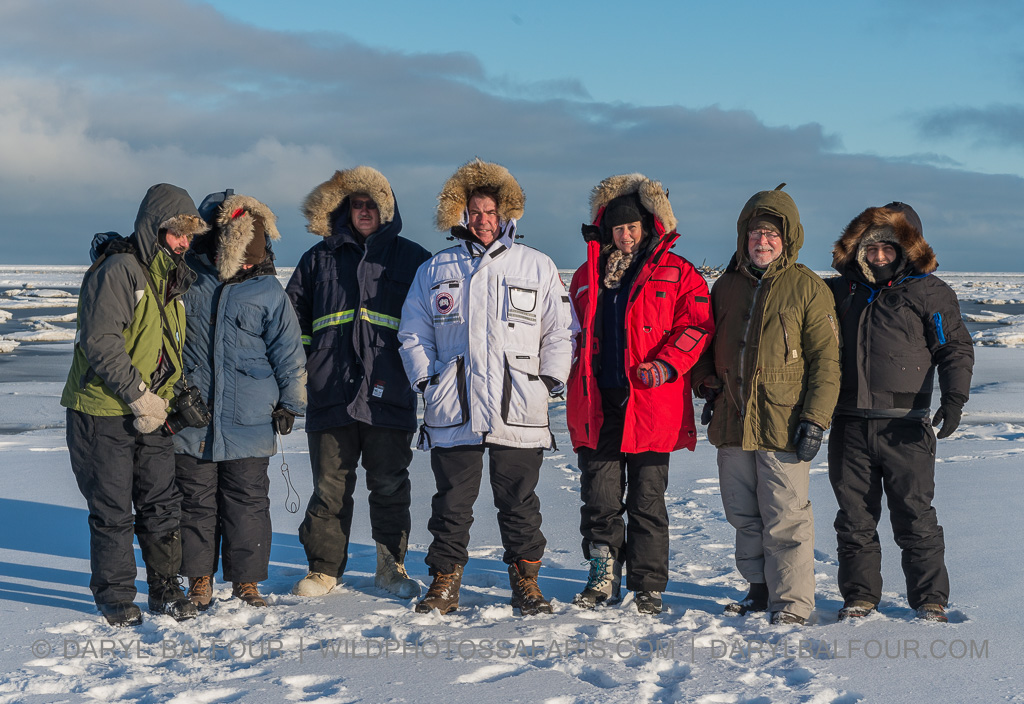
Our safari started from Winnipeg, the capital city of Manitoba province, with snow falling on the day of arrival to set the tone for the remainder of our safari. Winnipeg is quite a charming city, with some great restaurants, a wonderful old hotel in which we stayed - the Fort Garry - and some interesting sights. While in Winnipeg we picked up our polar boots and parkas supplied by the safari ground handlers, Natural Habitat Adventures, and met our dedicated polar bear guide. Brad Josephs has been guiding polar and grizzly bear trips since 1999 and there's not much he does not know about these animals. We hope to work with Brad on all our future polar bear safaris!

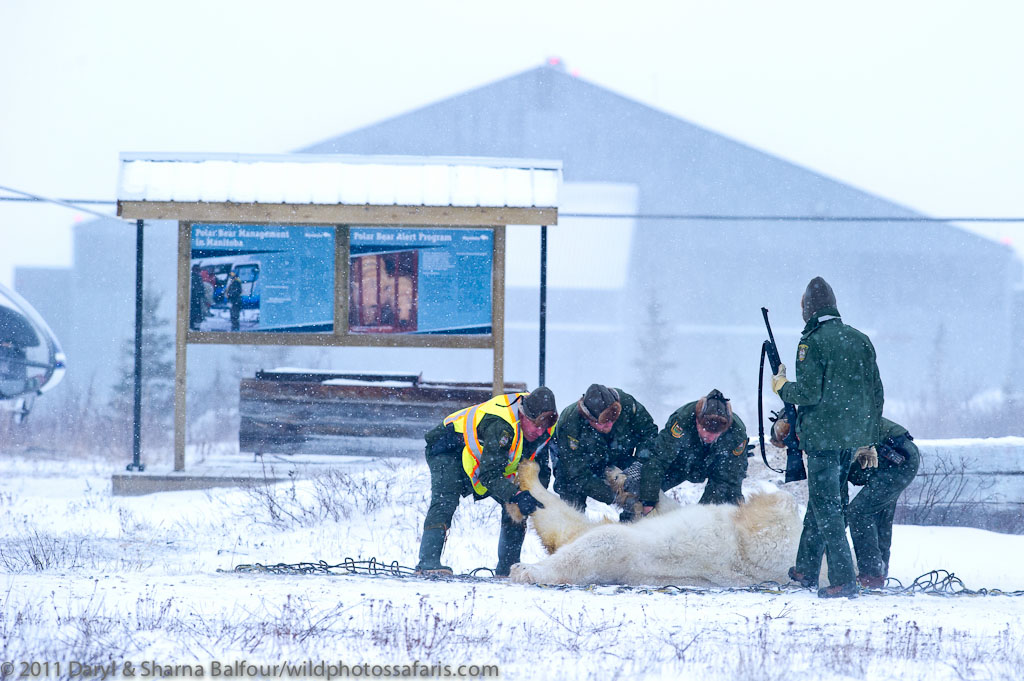
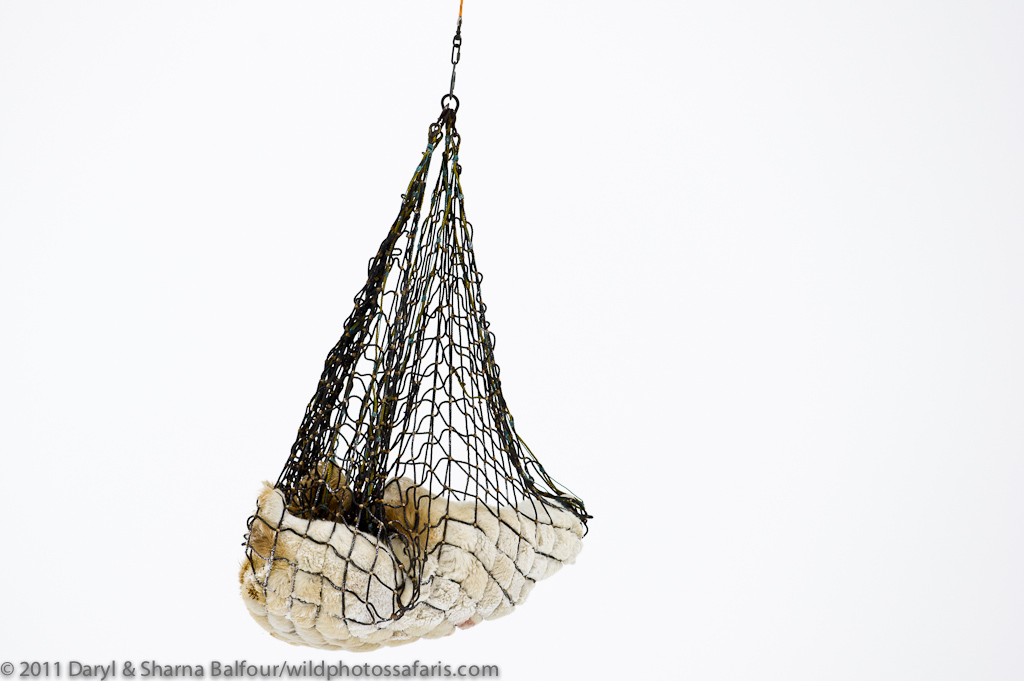
Day one of the safari saw us take a chartered Boeing 737 to Churchill, about two hours north of Winnipeg, on the shores of Hudson Bay. We arrived to a wintery wonderland of snow as far as the eye could see, and a very frontiers-type village. After a hasty lunch we were fortunate enough to be able to witness a bear reloaction from the "polar bear jail" where bears that trespass into the town of Churchill are held long enough to realise Churchill is not a good place to be, then airlifted out some 30 miles onto the northern tundra to continue their migration northwards.

Standing outside our bus to photograph this relocation we realised for the first time just how chilly things were likely to be! With a howling wind blowing snow in our faces, the wind-chill factor must have been at least -20C! Very brisk & bracing indeed!

However, excitement was high for our ensuing adventures, and at breakfast the next morning, around 6am - still pitch dark outside - there was an excited hubbub in the dining room! One of our regular travelers, Greg, asked me what my hopes and expectations were for the day. I gave it some thought and raised my fingers - four. "If we see four polar bears I'll be totally happy," I replied. Greg told me he'd love to see a bear and two cubs...which I thought was setting the bar a bit high!

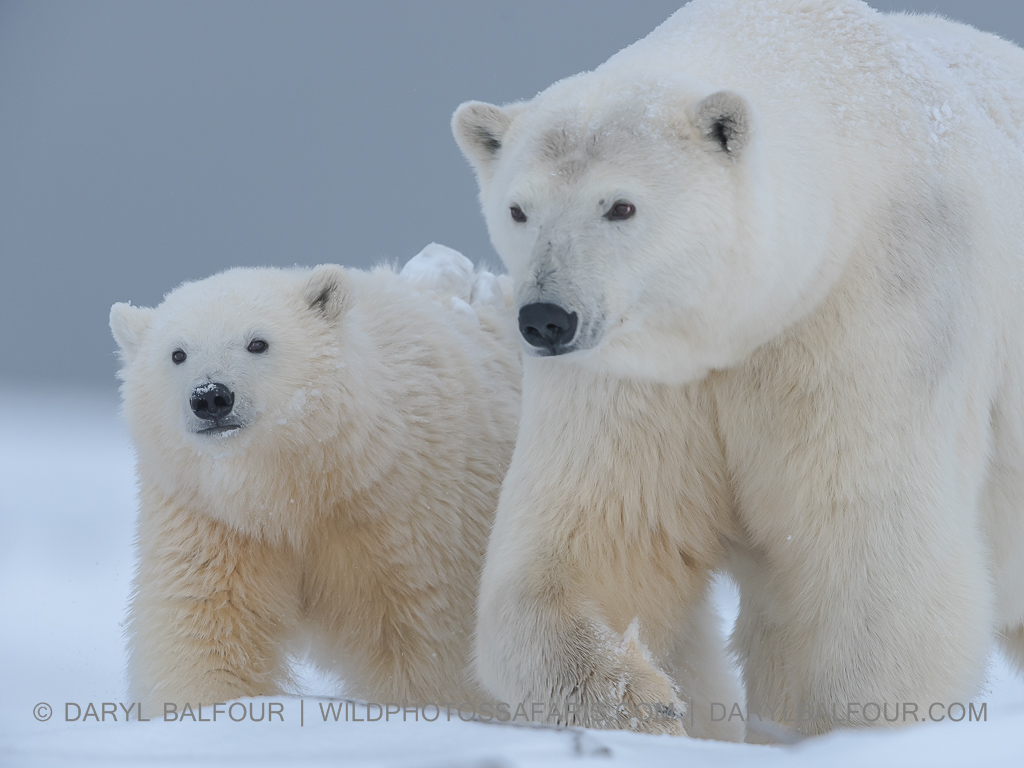
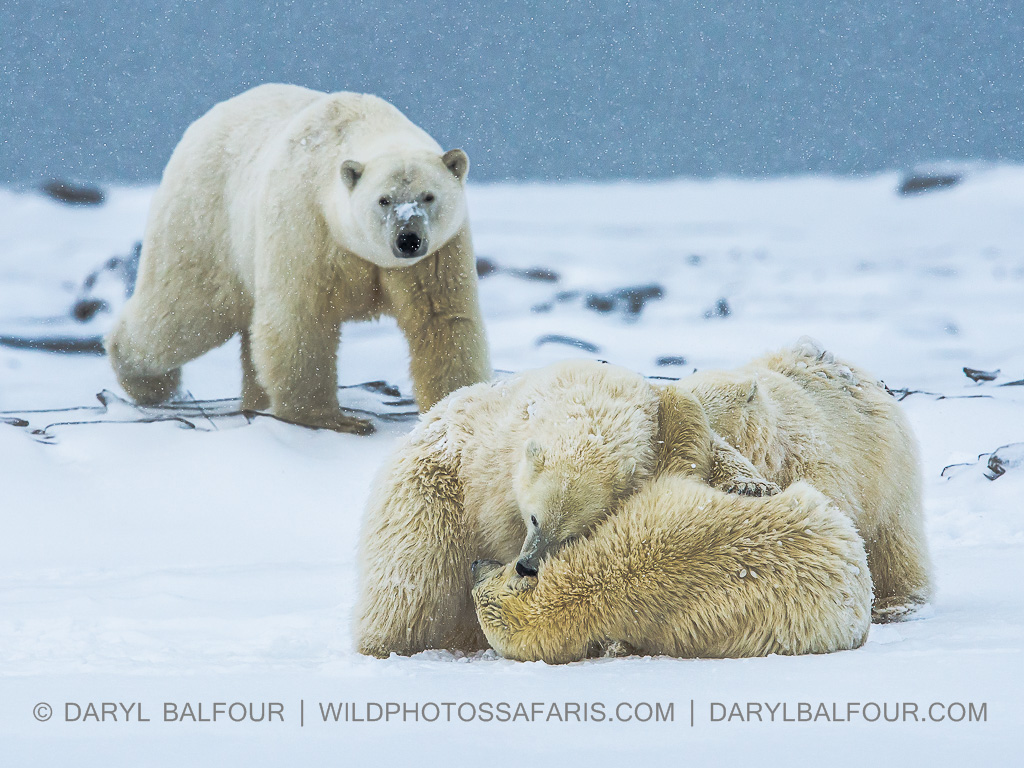
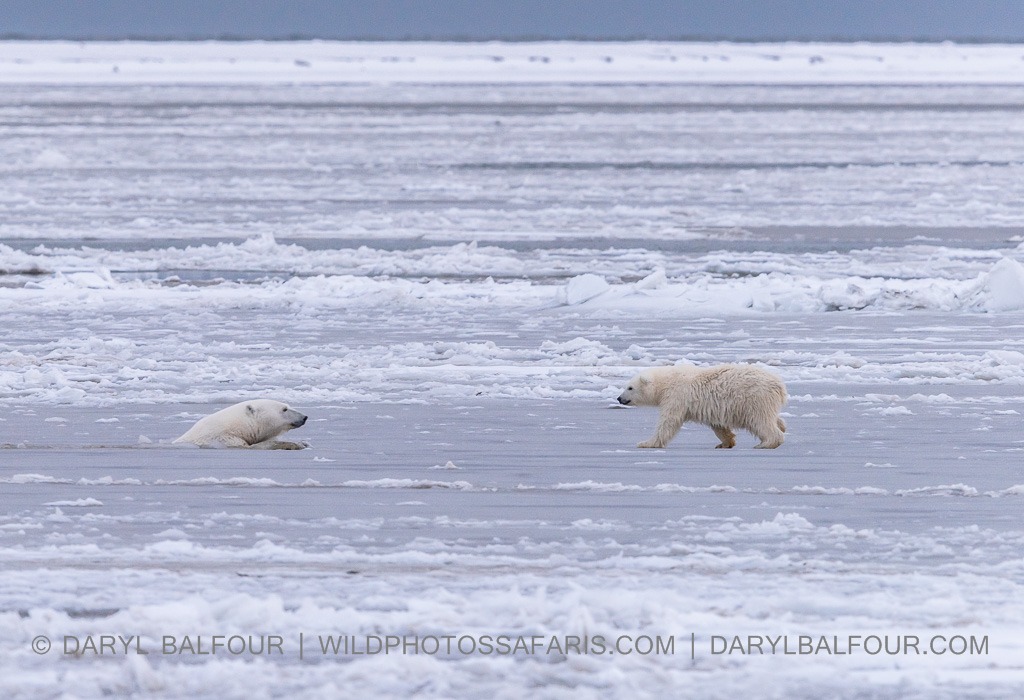
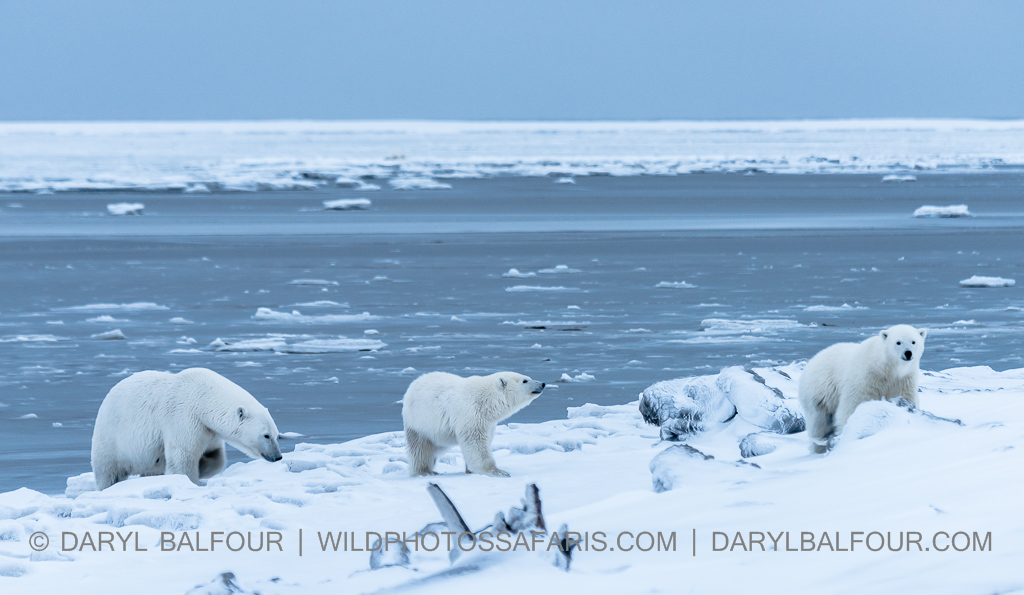
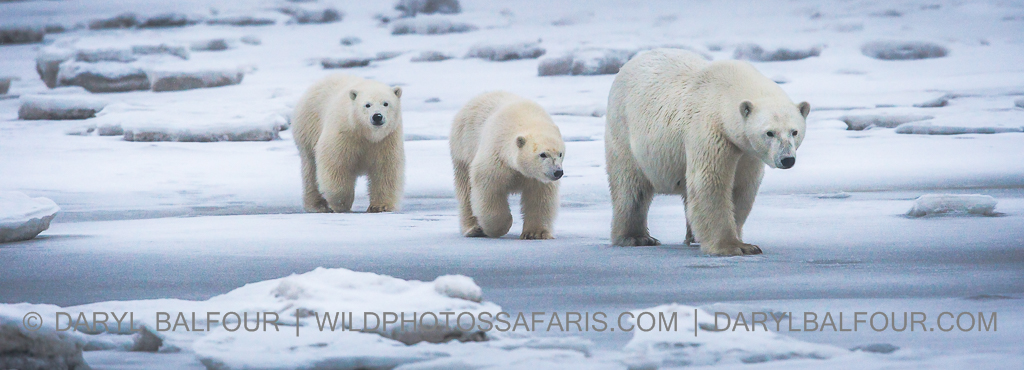
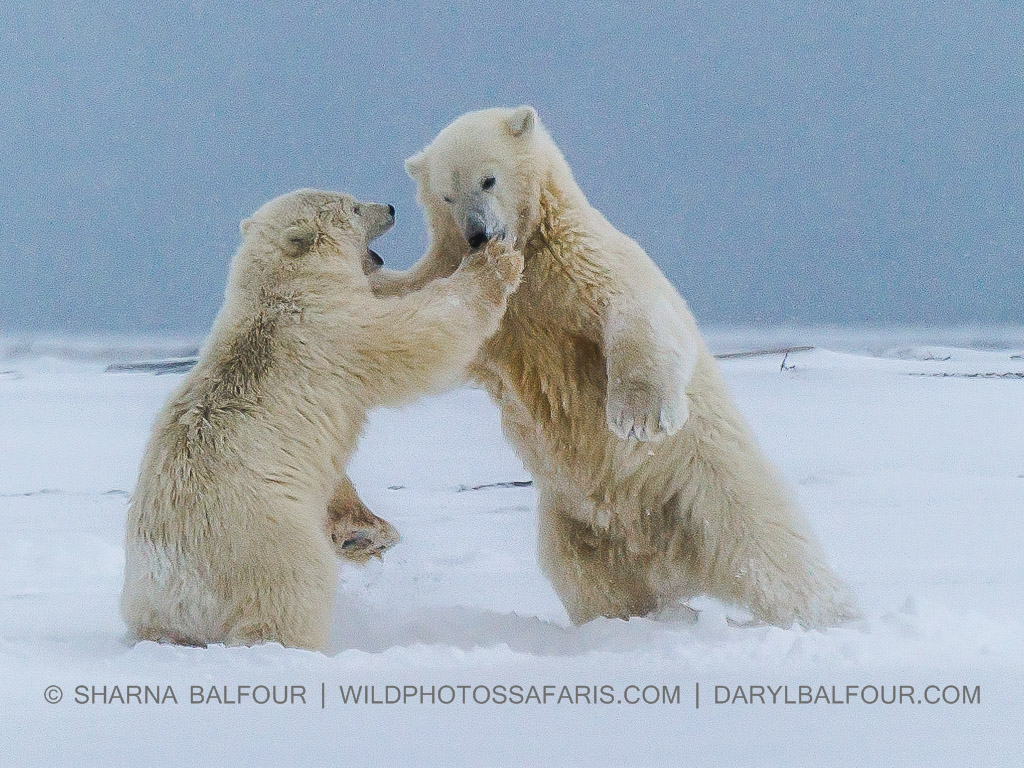
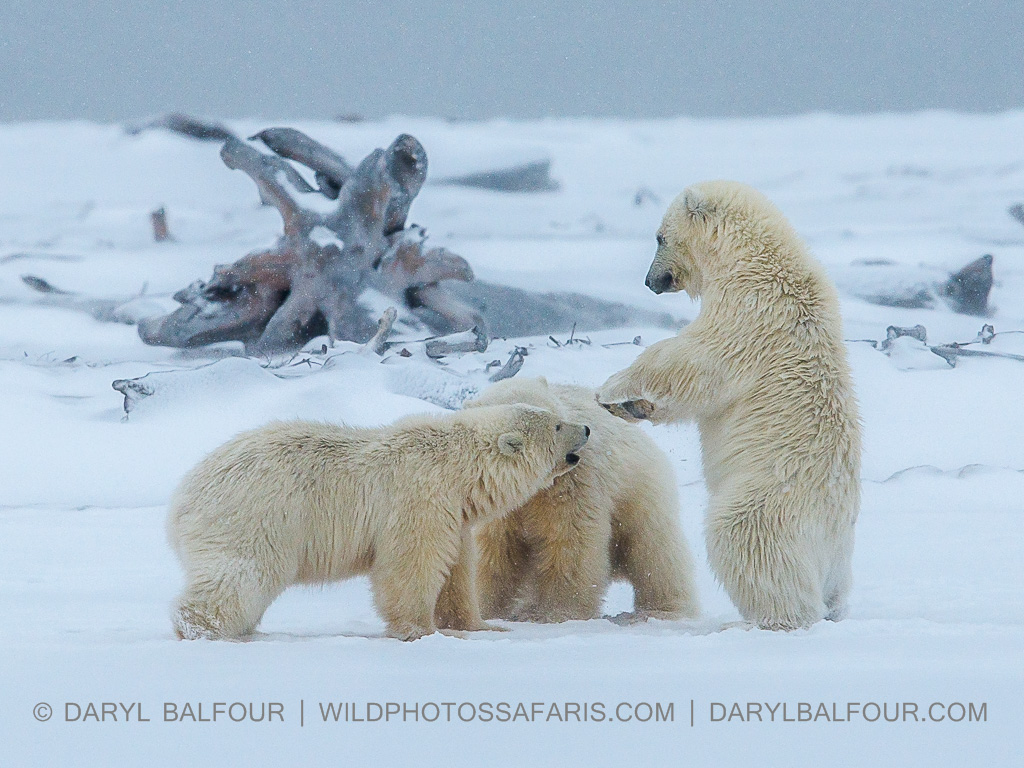
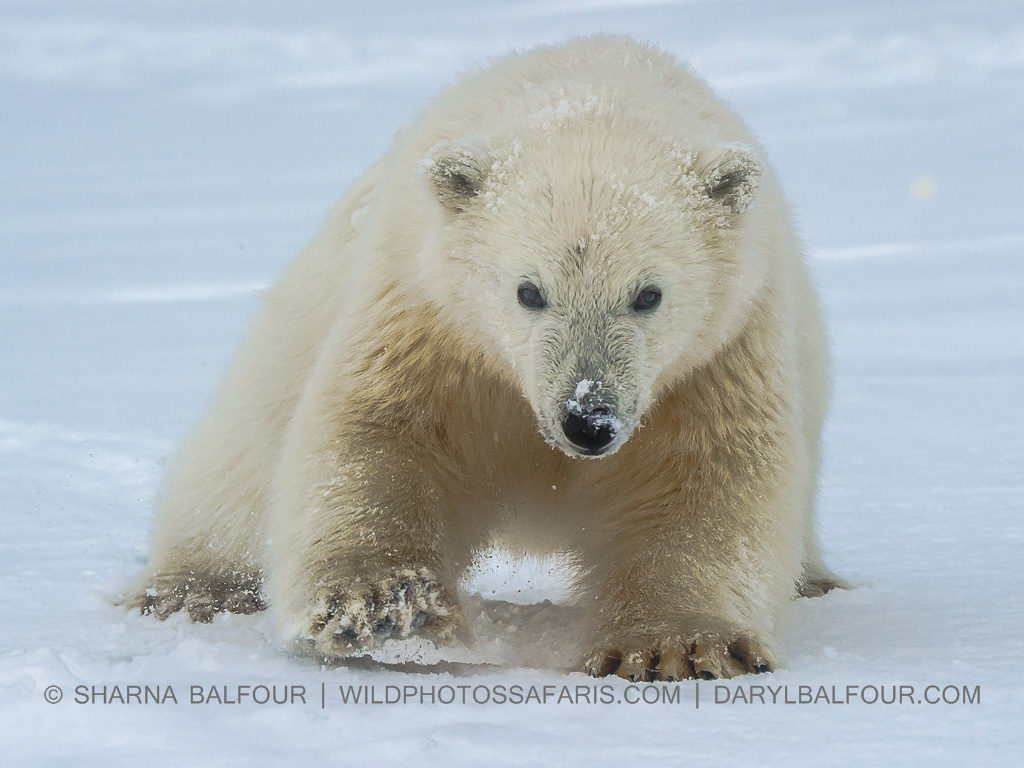
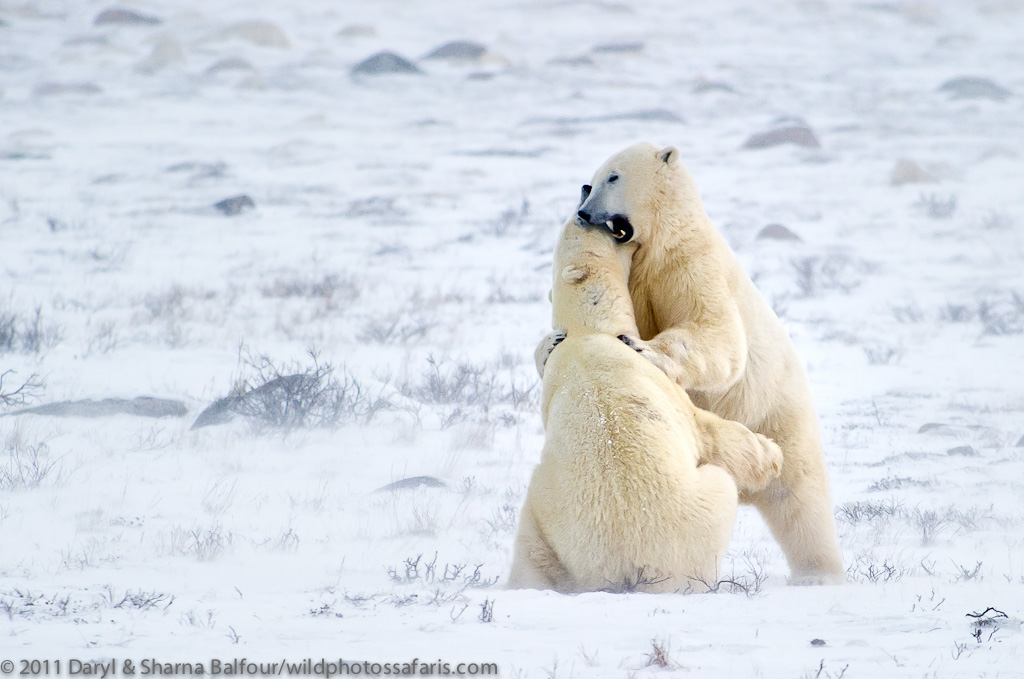
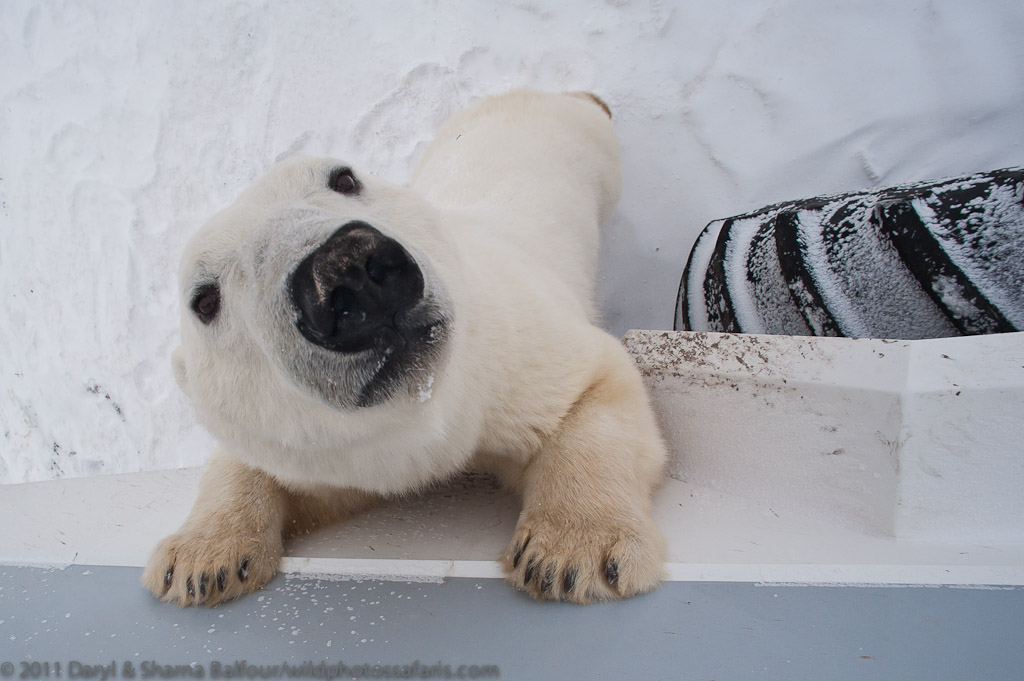
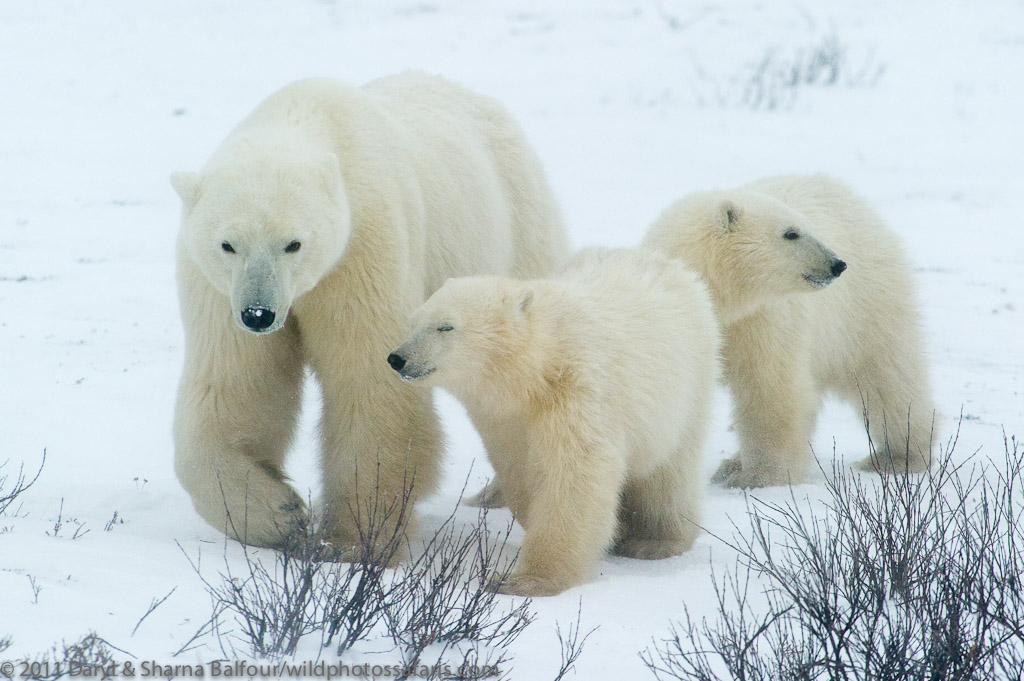
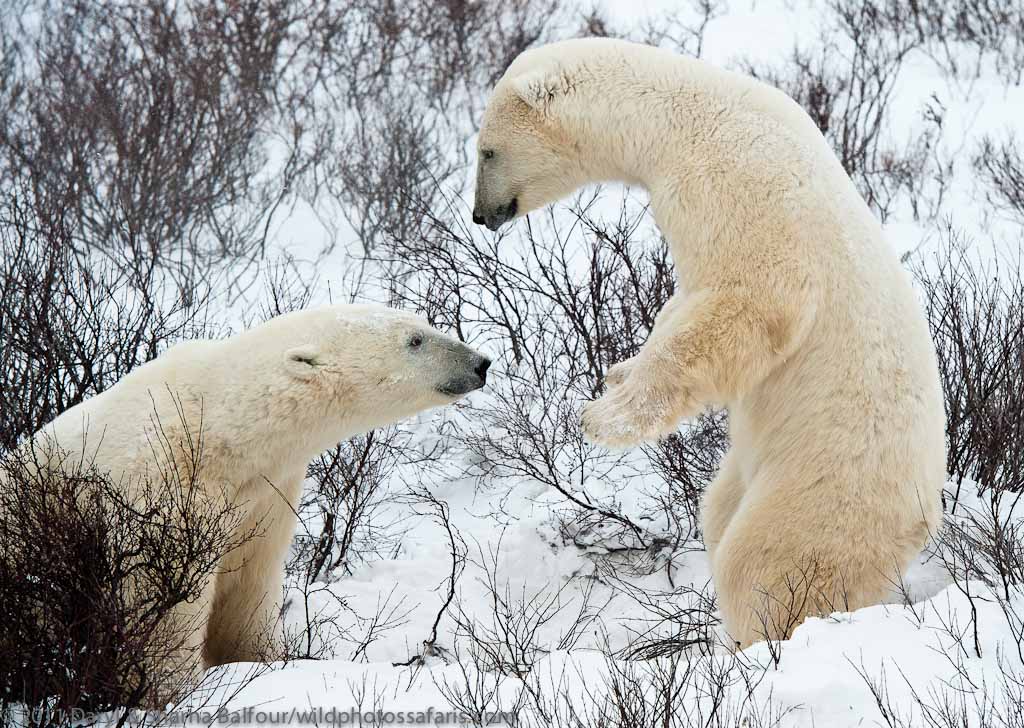
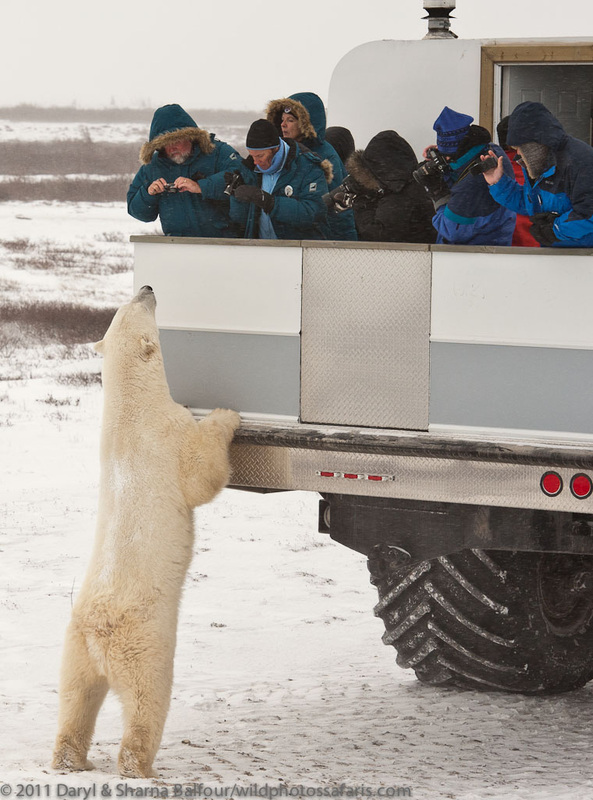
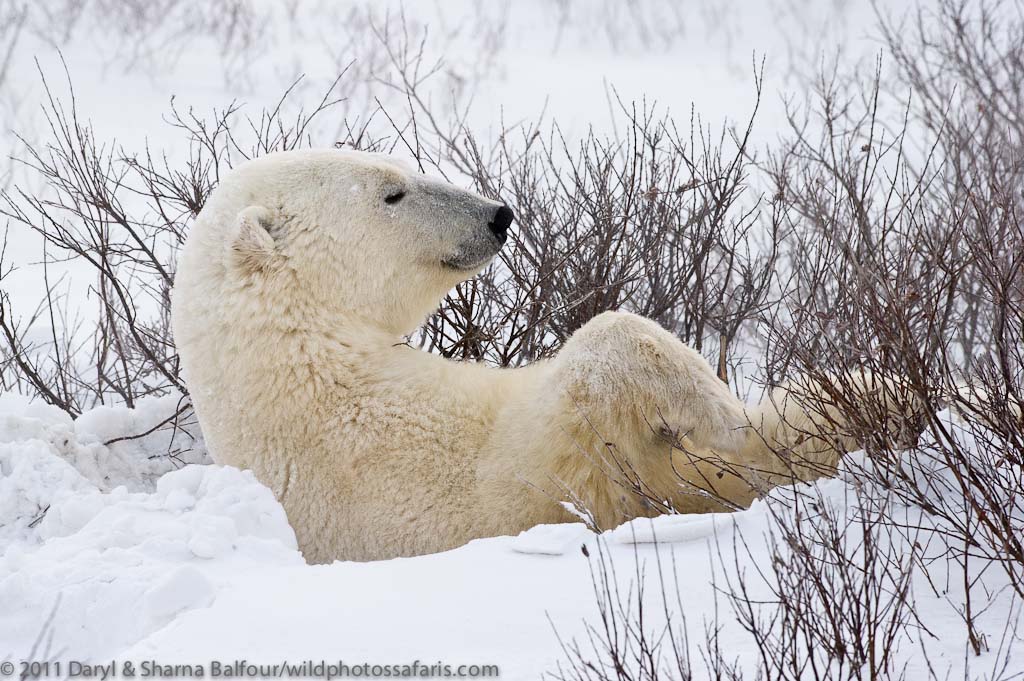
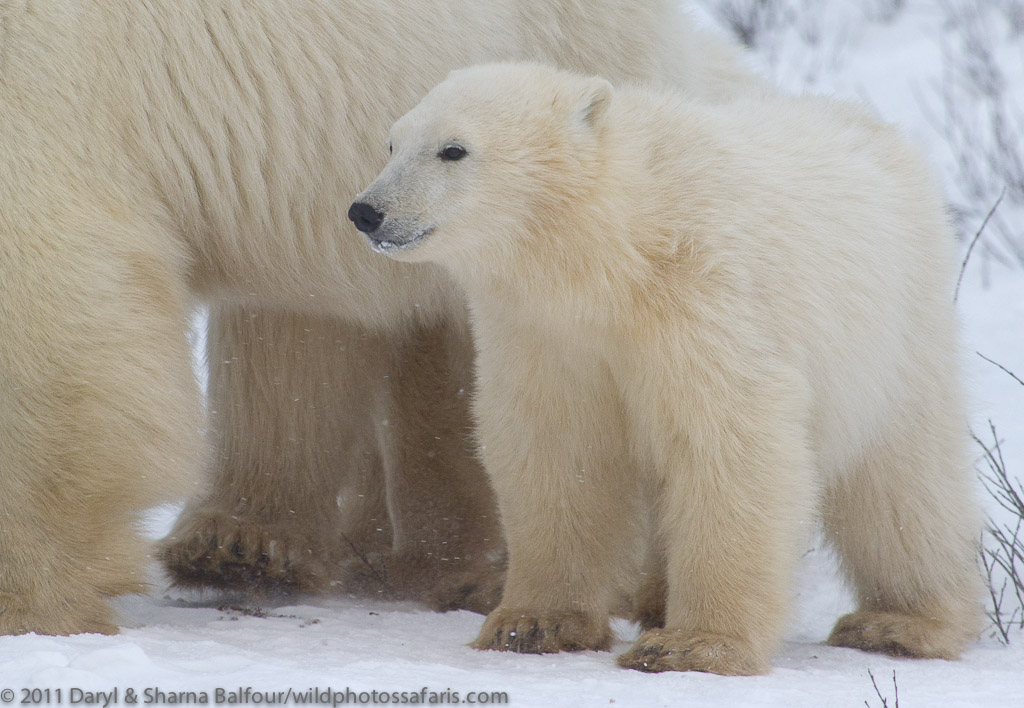
Well, to cut the story short - by lunchtime that day we'd seen a dozen bears, including a mum and two cubs right up alongside our tundra vehicle, the polar rover, several males sparring, and had two bears stand up against our rover in an attempt to see inside! Wow...mind blowing!!!
According to our guide Brad, it was the best day's viewing of the whole season to date, and I'll have to admit that even in my wildest dreams I'd not hoped for a day so spectacular. Incredible, awesome, fantastic.

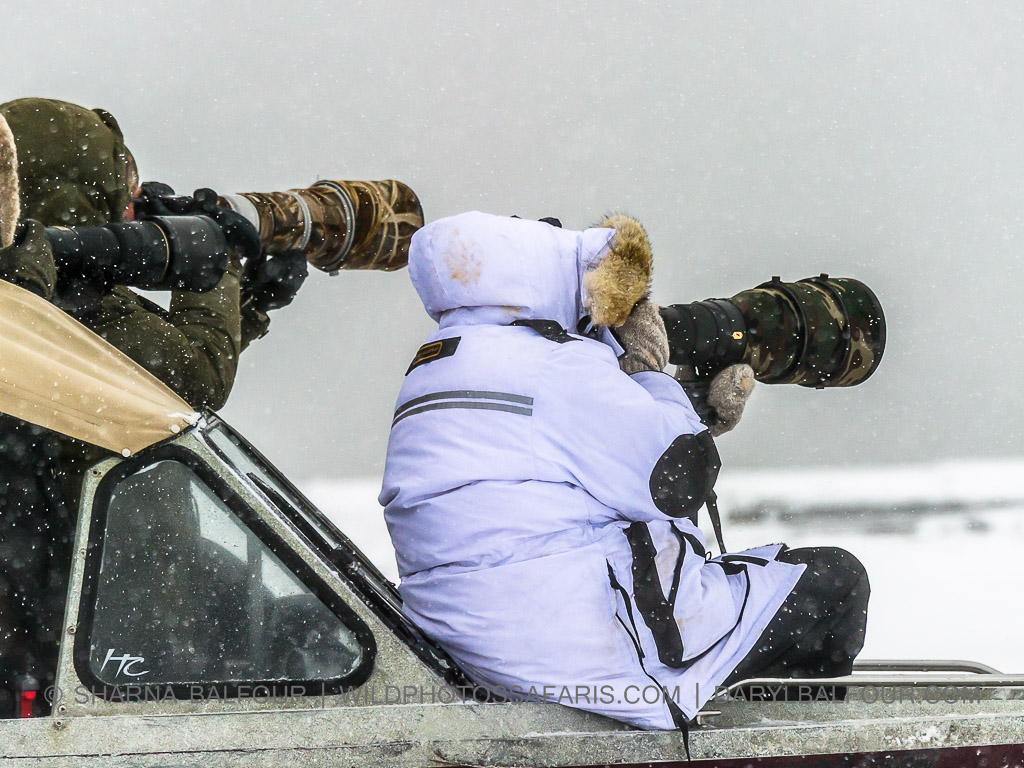
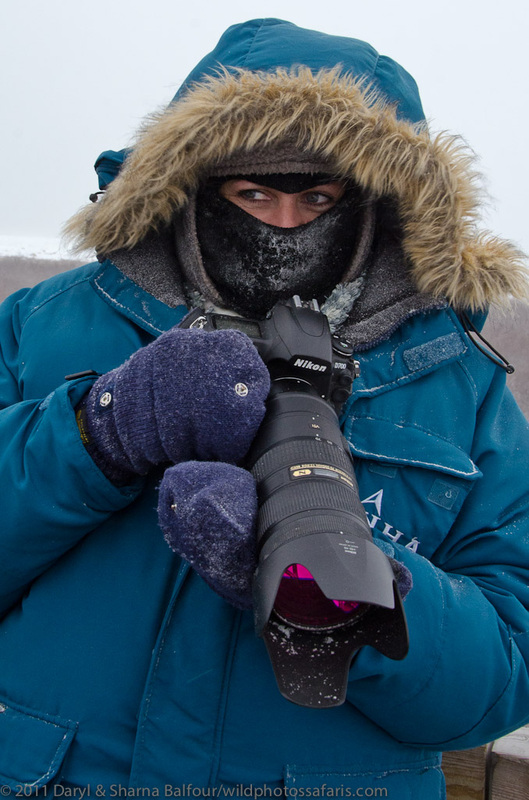
Life on the polar rovers is interesting, fun and exciting. They are spacious and quite comfy, huge and powerful. There's a propane heater in the back, but because we were a group of photographers, with cameras & condensation to consider, the inside temperature was kept relatively cool - read cold - so there was not too much condensation on cameras and lenses when venturing in and out (there's an open viewing platform out back). The rovers have a flush toilet on board, and hot soup along with tea, coffee or hot chocolate are on offer. I had an interesting experience when I placed my Coke on the floor during lunch one day, to find it semi-frozen when I picked it up a few minutes later! Most of the photographers enjoyed the added freedom of photographing on the open back deck, but it is difficult to stay outdoors very long when there's a gale blowing, and snow & ice are whipped in your face! On the first day I stayed outside for over and hour...and had my eyelid & lashes freeze closed! Brrr...

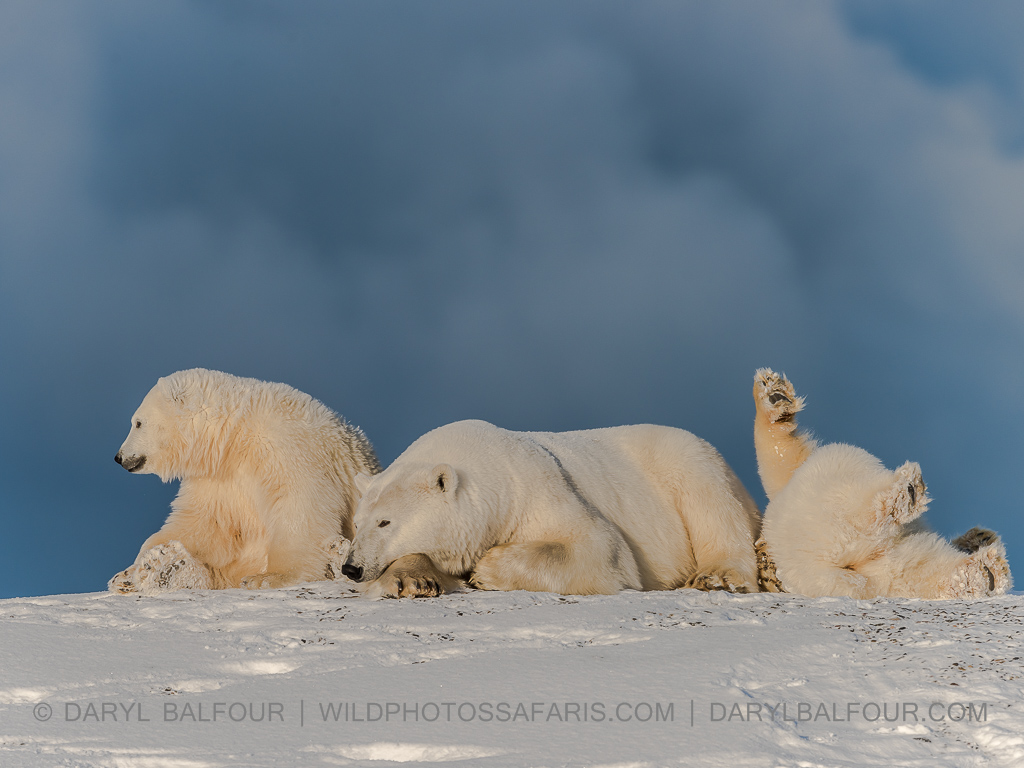
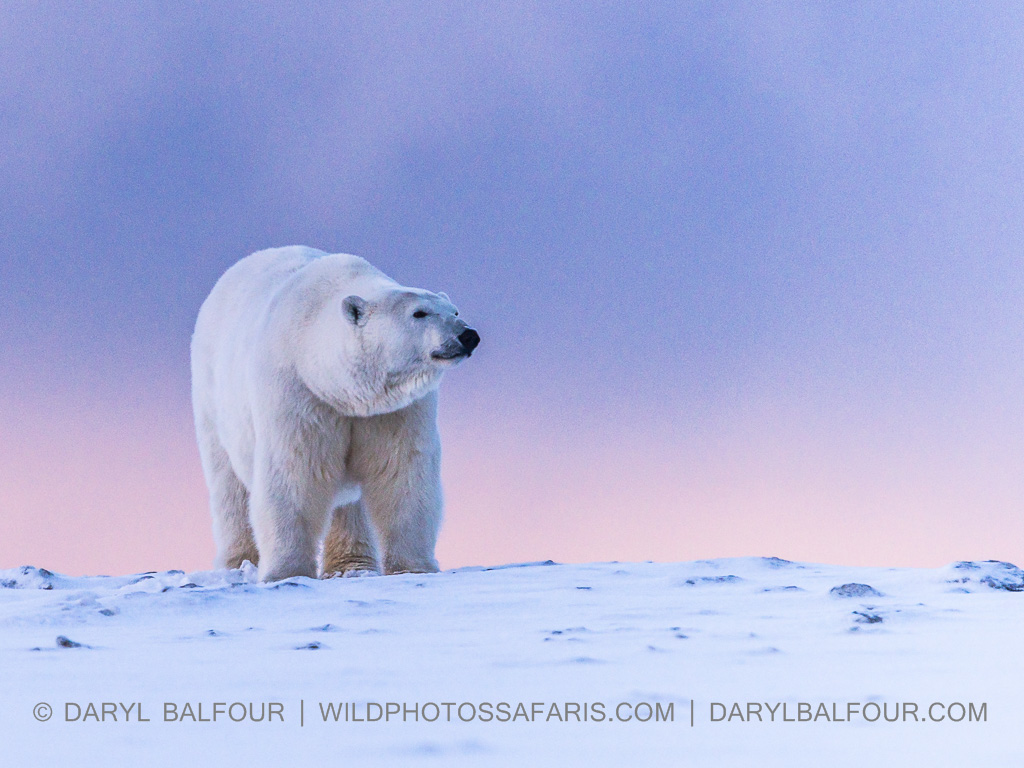
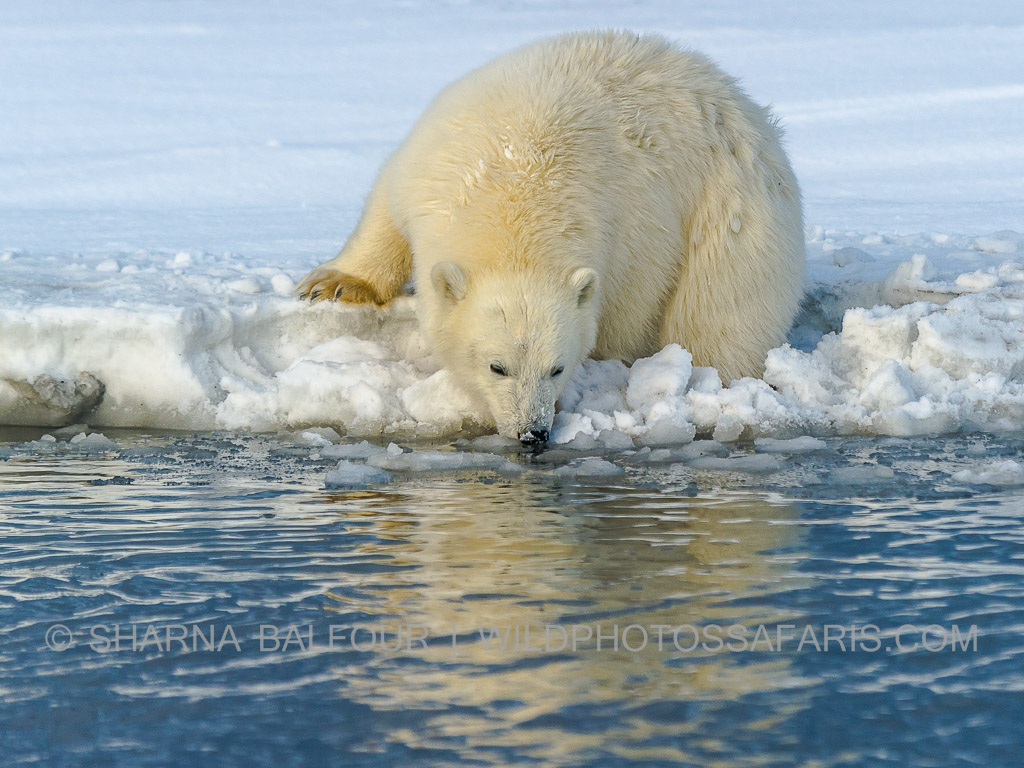
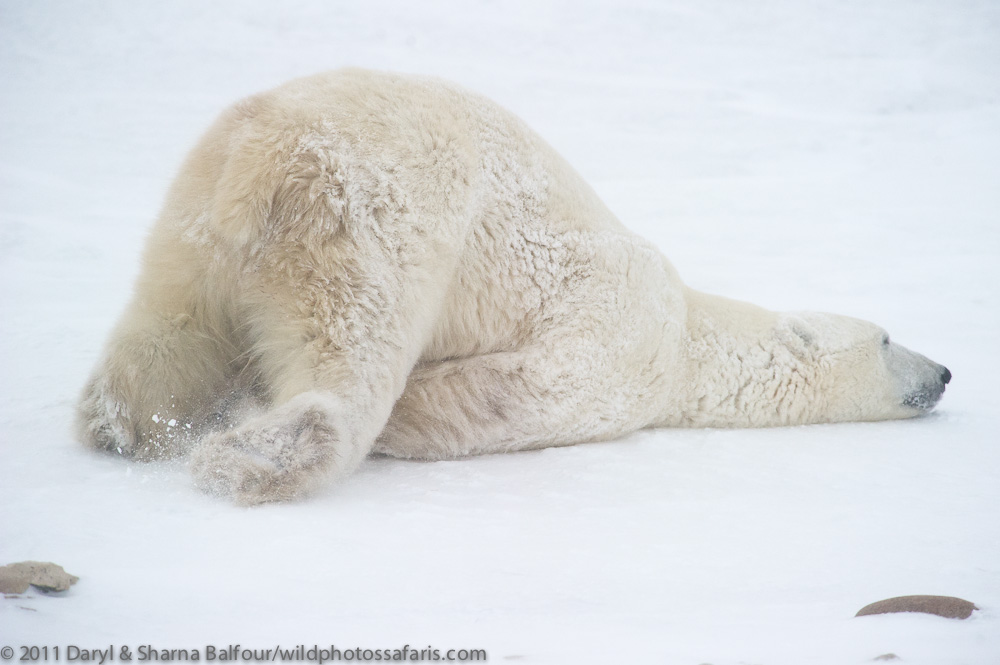
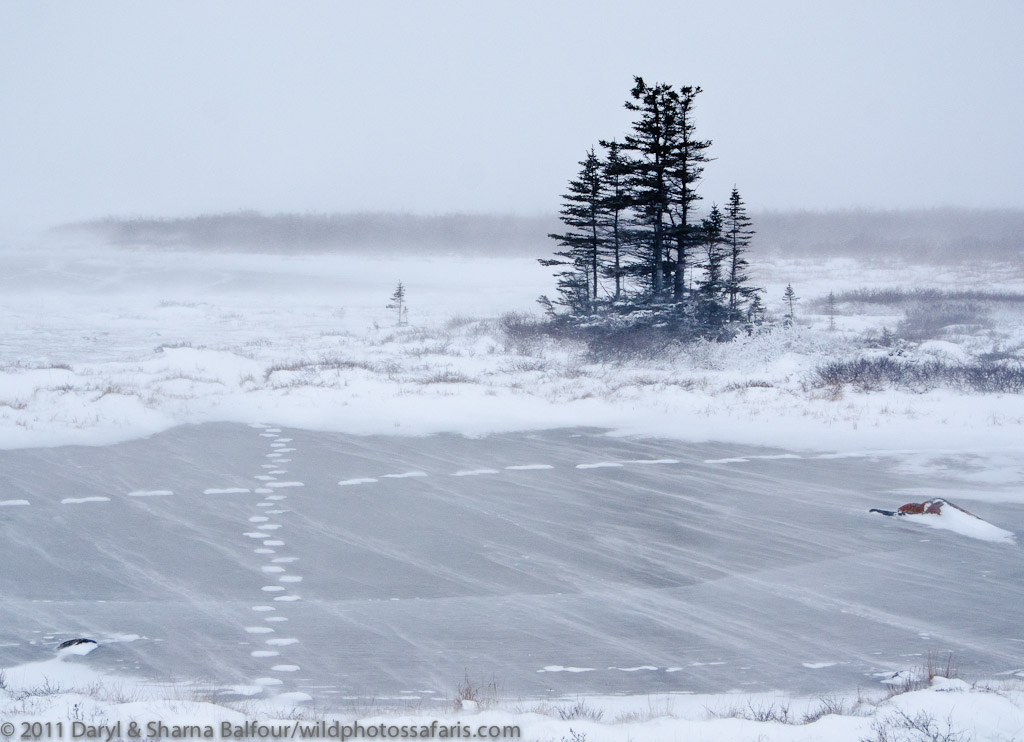
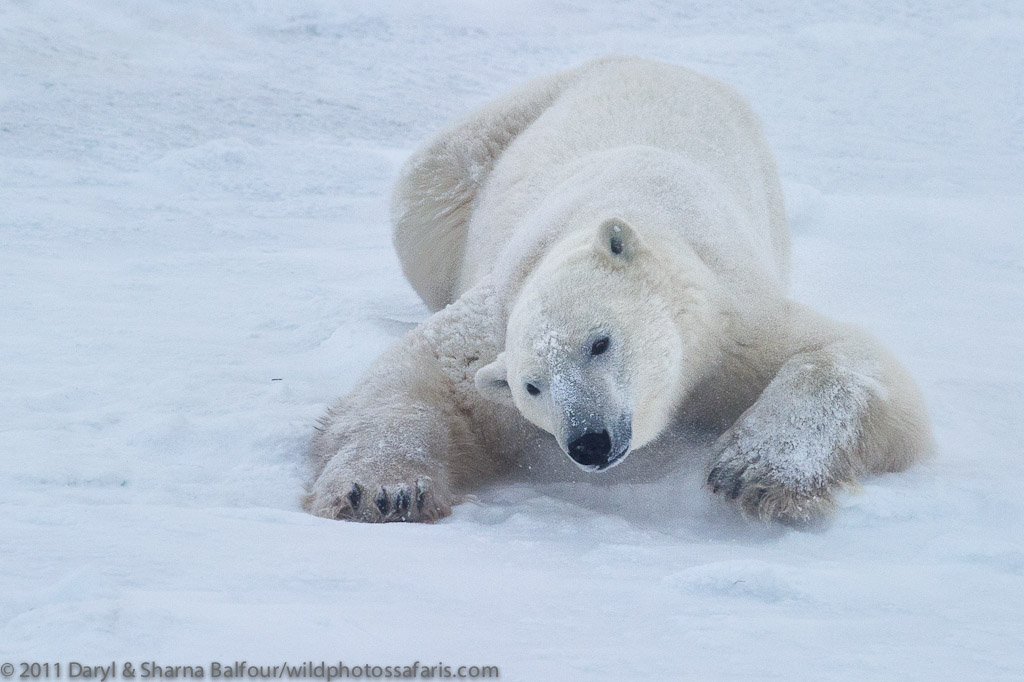
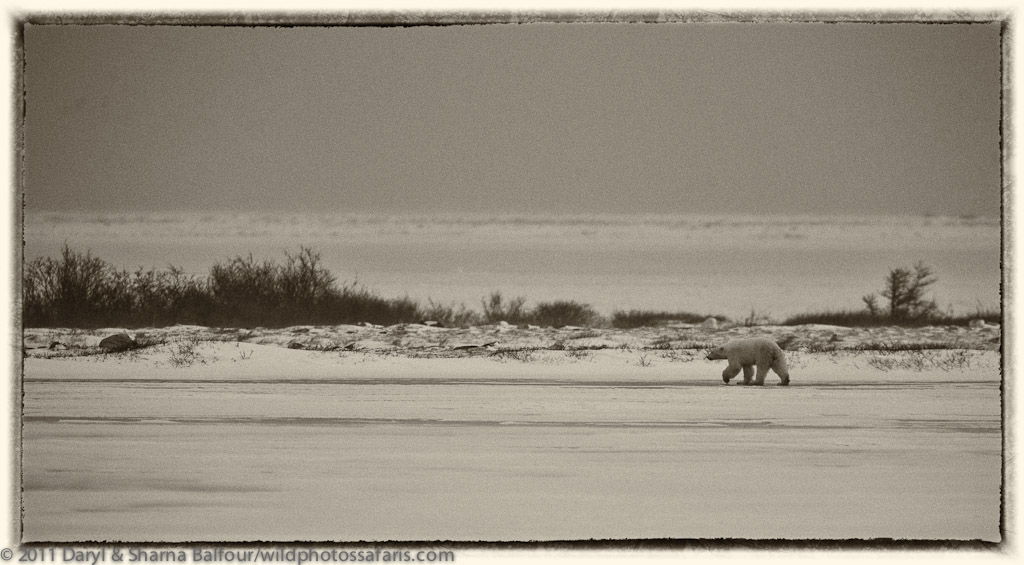
The land of the icebear is harsh indeed, but beautiful in its starkness. We enjoyed many stops to photograph the landscape, stunted spruce trees crusted with ice, frozen ponds with bear tracks crossing them, but most of all we enjoyed the polar bears and their antics. We had a number of sparring episodes, and a great sighting of a young male taking a snow bath right alongside the track on our second morning.
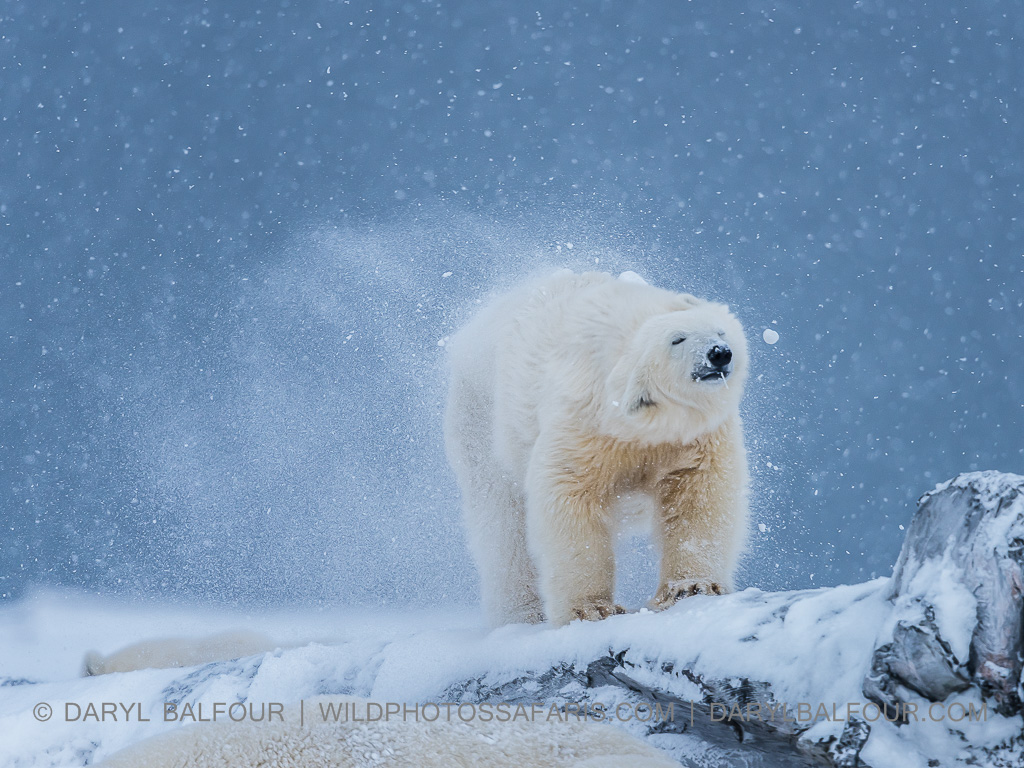
Thus went our days. Rise early, an excited pre-dawn breakfast back at our lodge in town, followed by a bus ride for about 30 minutes to the polar rover "launch area" out of town. From there it was generally less than 30 minutes in the polar rover before we'd see our first bears of the day. Weather conditions were testing at times, with blizzards limiting visibility, driven snow and f-f-f-freezing temperatures. We had an absolute ball though...and I cannot wait for next year's return to Churchill and the Ice Bears! We have decided to make a few minor changes to the program, not least of it being to take fewer people in the polar rovers so that everybody has an entire row of seats covering both left and right sides of the polar rovers. This will of course make the safari more expensive than in 2011...but also that much more exclusive! Many of these polar rover & tundra buggy tours have 30 or more people in them! We already have a number of guests interested in joining us in 2012, so if you are keen, get your names on the list as soon as possible.

But back to the fire. As my friend Greg said the next day...you can sell this as the Fire & Ice safari, but it is not something we'd like to repeat. About 10 pm on our last night we got a knock on our door. I was about to get into the shower, having just completed our packing for the early departure next morning, so Sharna opened to find a member of the lodge management saying: "The hotel is on fire...please evacuate."  Ever practical, Sharna turned to me and said: "I'm taking the cameras outside. Get dressed quickly." Fortunately both camera cases were ready pack, standing behind the door, so she picked them up and left the hotel by a back entrance near our room. Outside Sharna quickly did a head-count of our guests and saw that everyone was outside, apart from Greg and Mary. She immediately asked two of the hotel staff to move one of our elderly guests into a motor vehicle as she was standing inthe cold in a night-dress, sneakers and her parka. She then returned to the hotel to find Greg & Mary, whom she encountered walking down the passage carrying some of their baggage. Returning to our room, she urged me to hurry up - I was finishing dressing again - grabbed her clothing bag and a duvet off the bed, and once again left the hotel. I picked up my bag which was waiting fully packed on the bed, scooped the clothes we'd laid out to wear the next day into a black trash can liner I'd used to protect my cameras & lenses from condensation, and followed her out into the snow.

By this stage the Churchill fire department was on the scene, as well as buses from Natural Habitat into which all guests were shepherded out of the wind and cold. The hotel was not quite ablaze as yet, but thick toxic smoke was billowing from the building. getting on to the bus where most of our guests were, Brenda - a South African traveler - informed me that her passport was still in the building in her bag "on my bed."

I returned to the lodge and asked the fire chief if he could send someone into the room - I pointed it out to him - to collect the bag, knowing that a South African abroad without a passport faced many major obstacles! He responded that he was not interested in saving "personal belongings", so I decided to go in myself, skirting the fire officers who seemed to be having trouble getting water to flow through their hoses.

I made my way to Brenda's room, and there on her bed found the small brown bag she'd taken on the polar rovers each day, as well as a duffel bag with her clothing. I grabbed these and made a hasty exit, confident I'd saved her documents! But when she saw me Brenda wailed..."that's not my passport & cards, they are in my handbag, on the bed...or next to the bed."

So I went back to the hotel, where the firemen tried to prevent me from entering the building. Again I skirted them and went through a back entrance, made my way to the passageway where Brenda's room was located...and then as I entered the room the electricity exploded, lights went out and a cloud of smoke erupted through the floor. I was forced to beat a hasty retreat, empty handed! Many of our guests left the hotel empty handed, or relatively empty handed, though almost everyone else did take their passports etc with them. Some lost clothing, others cameras and cellphones. It was a traumatic night of fire amid the ice, one that most will never forget. I was relieved however that the Natural Habitat Adventures staff in Churchill and Winnipeg reacted so quickly and so well - as one of our guests, Mary, later said: "I do think Natural Habitat has handled the situation as well as anyone could have hoped for or expected.  Thanks to you, Daryl, for choosing the best, as always."

Hopefully anomalies such as fires on ther tundra are a once-in-a-lifetime mishap. I certainly look forward with eager anticipation to the polar bear adventure next year.
 
 
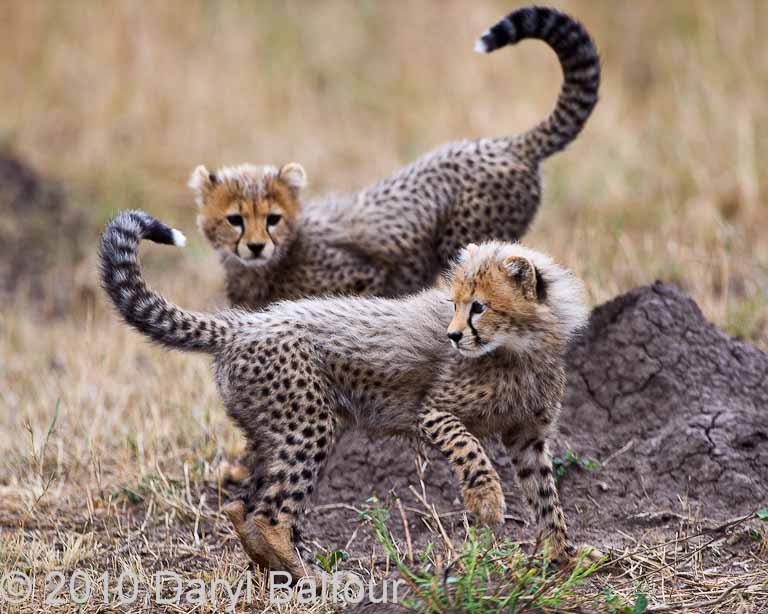
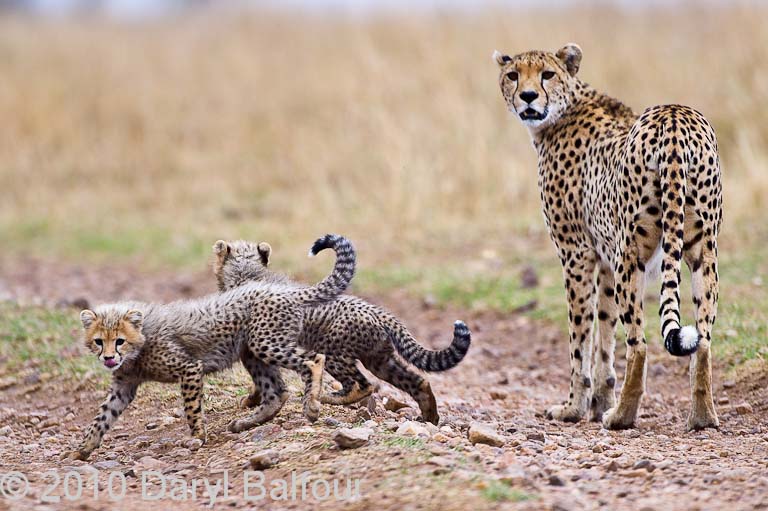
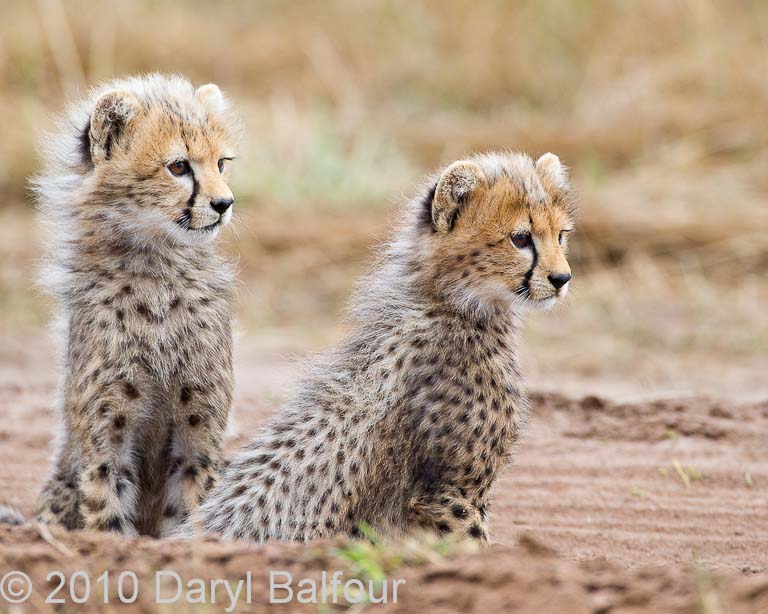
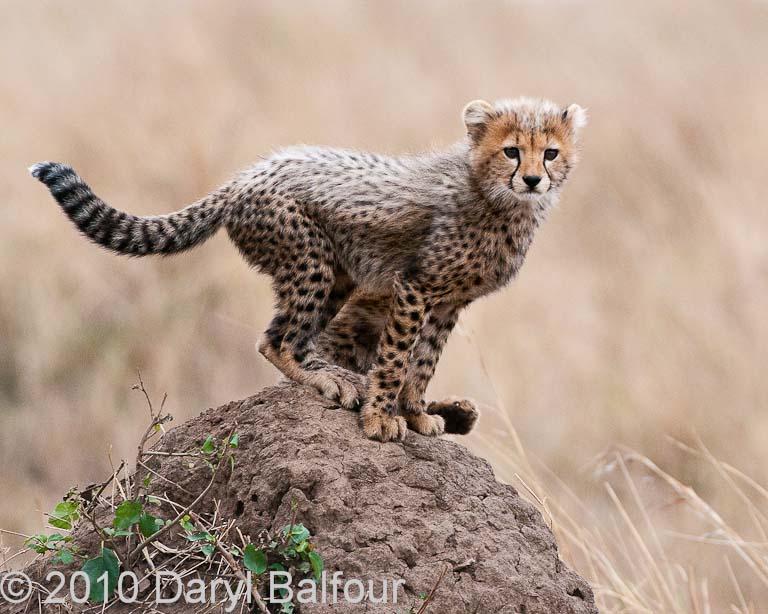
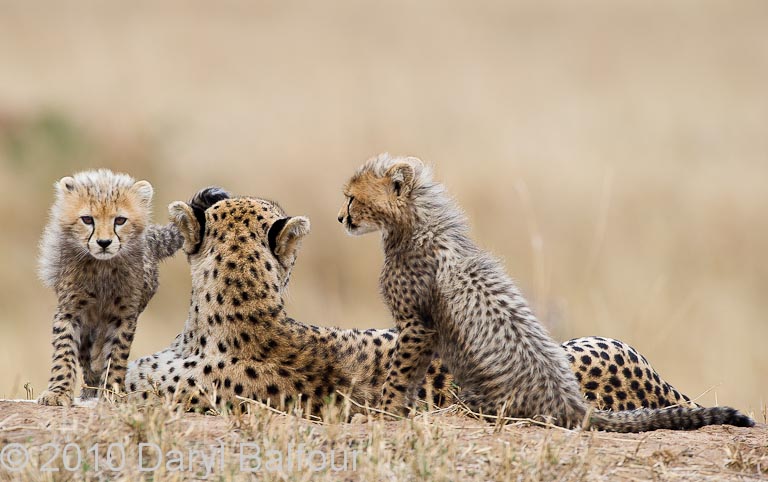
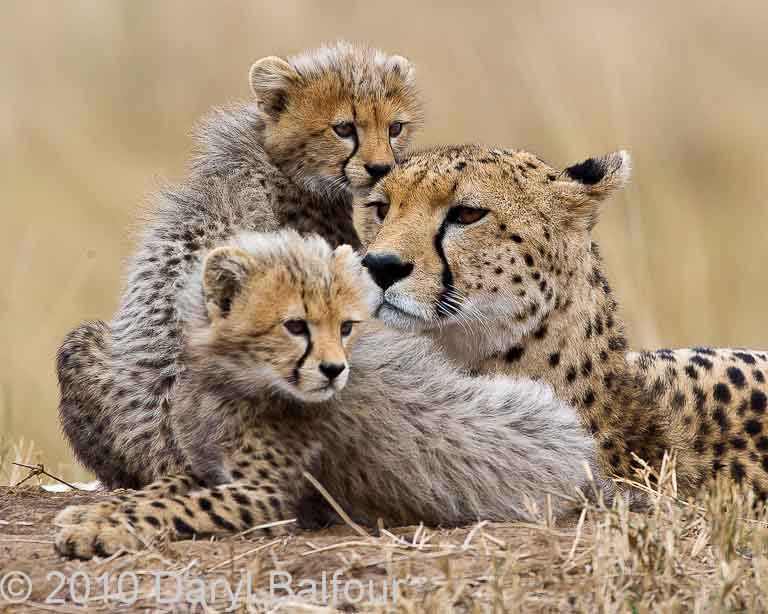
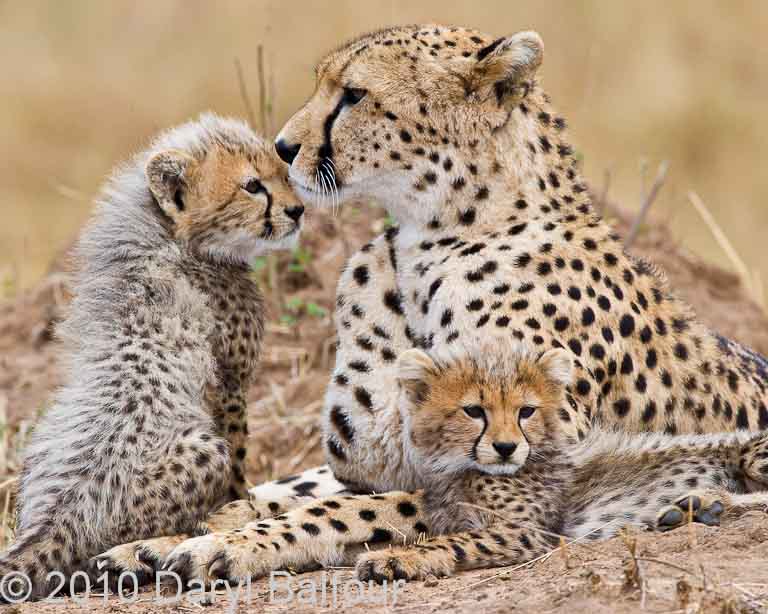
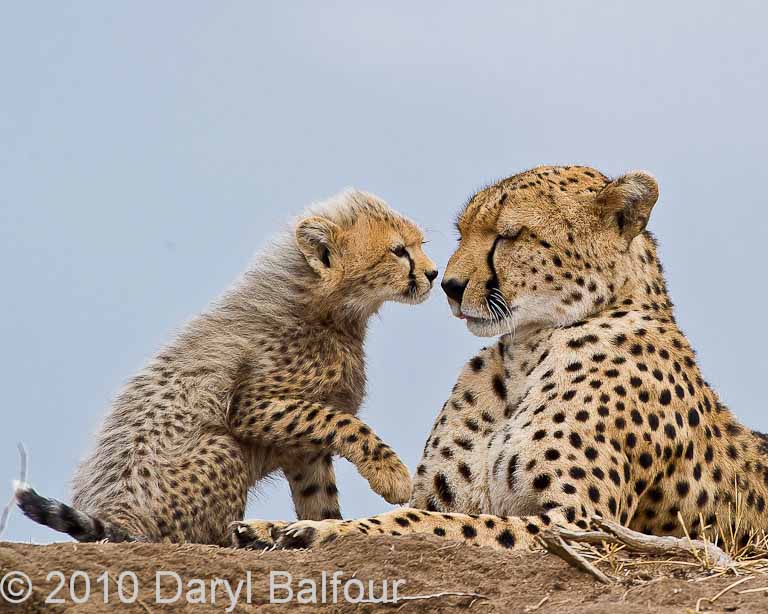
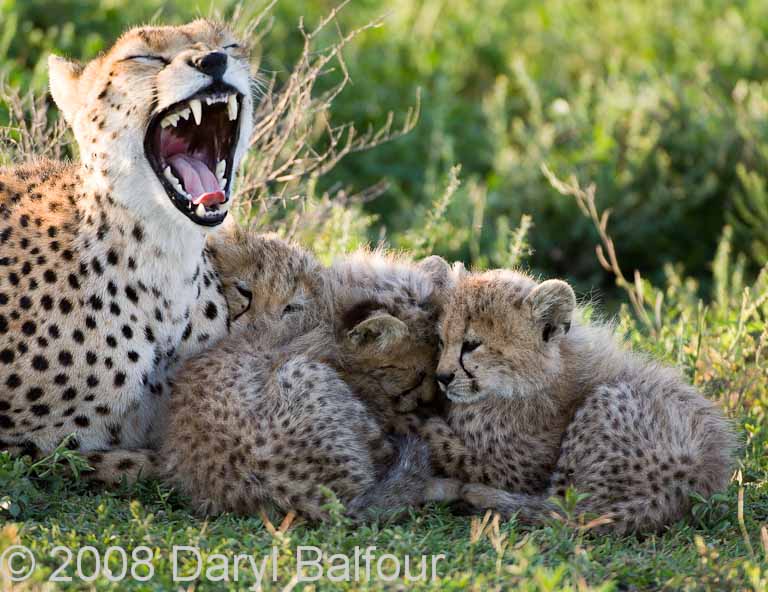
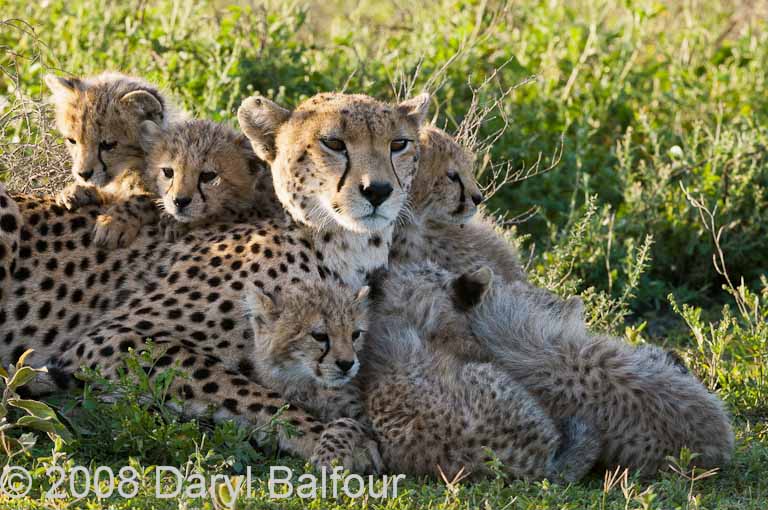
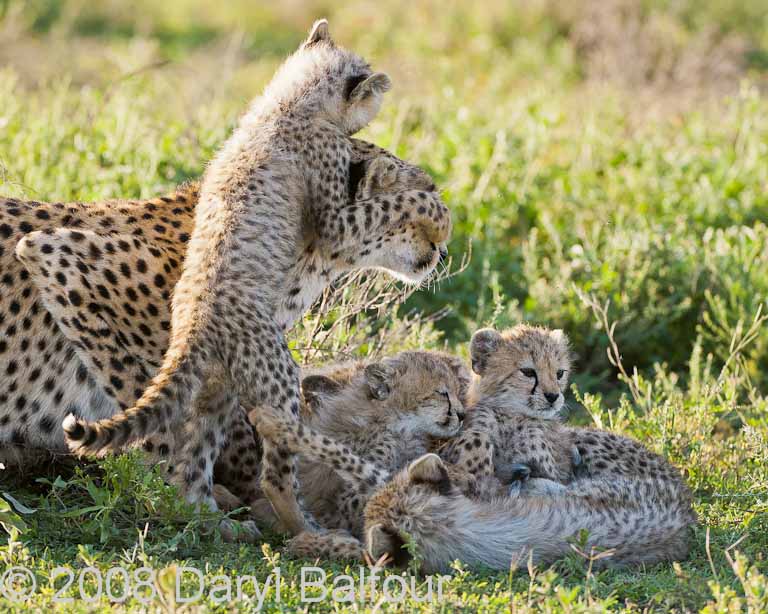
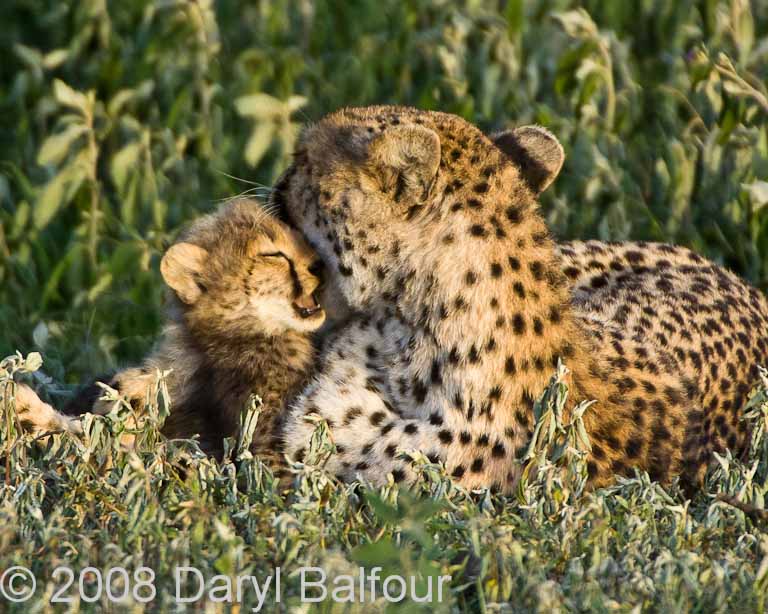
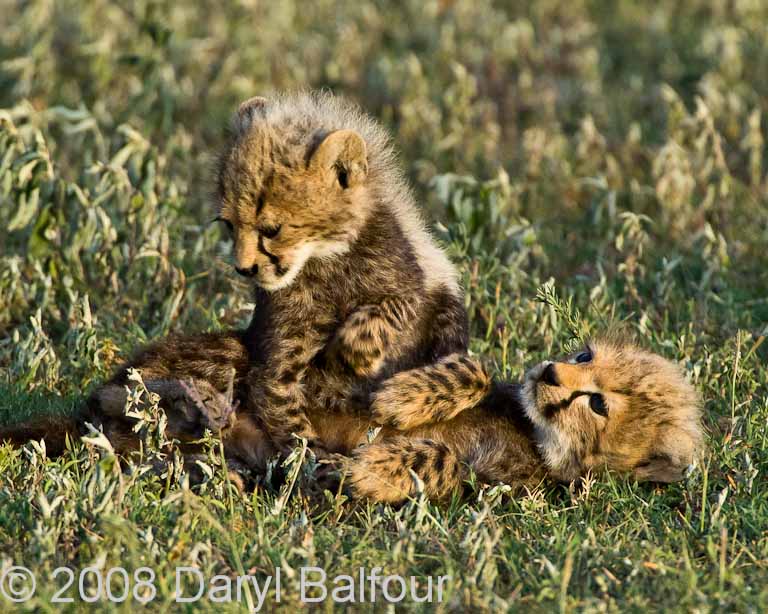
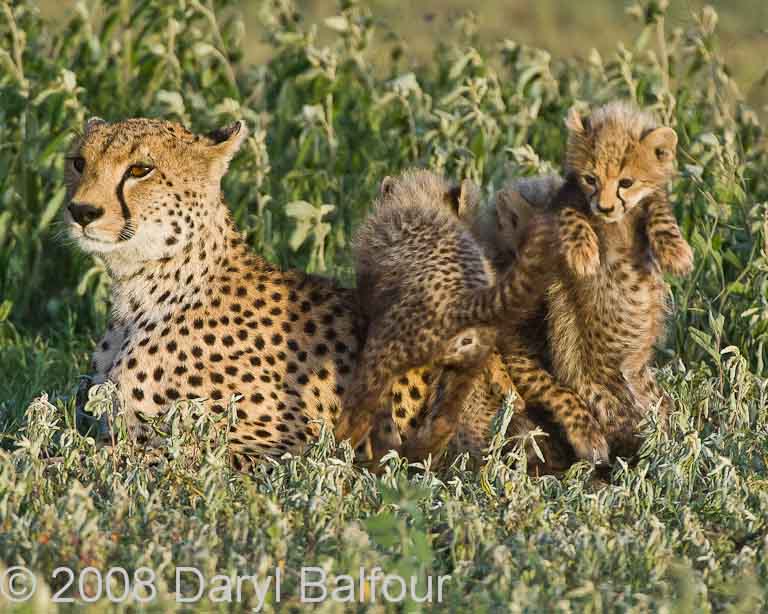
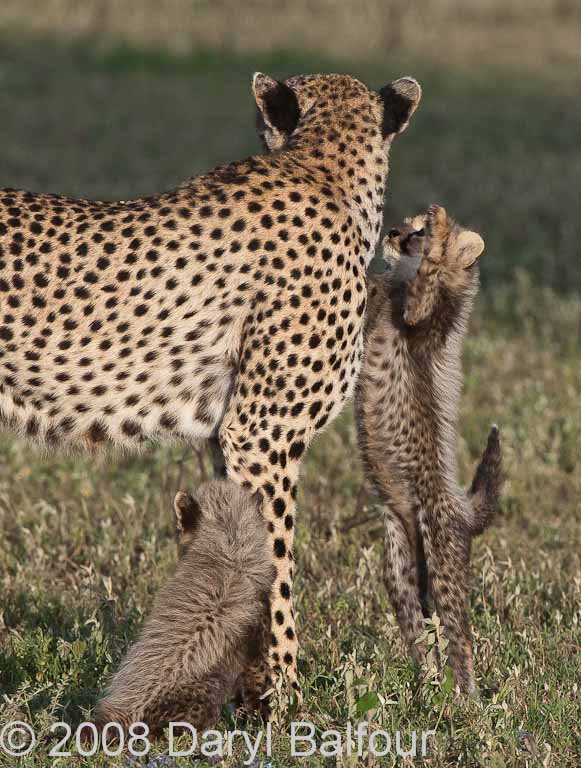
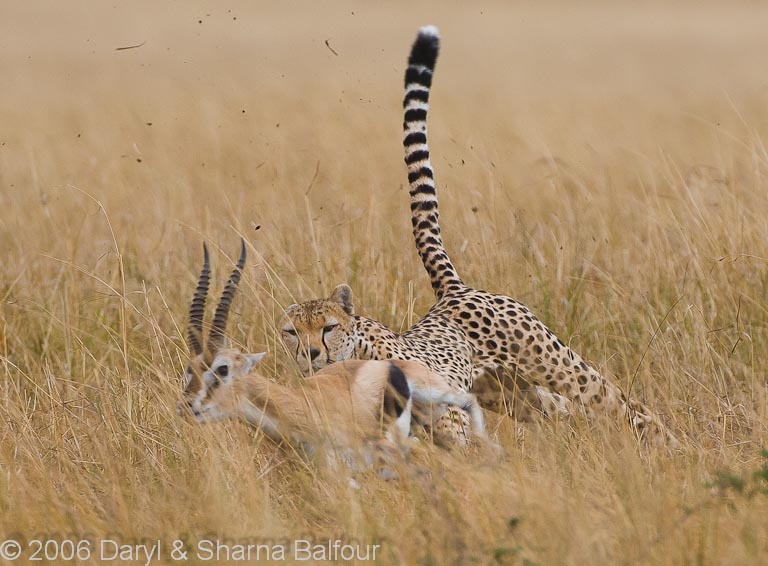
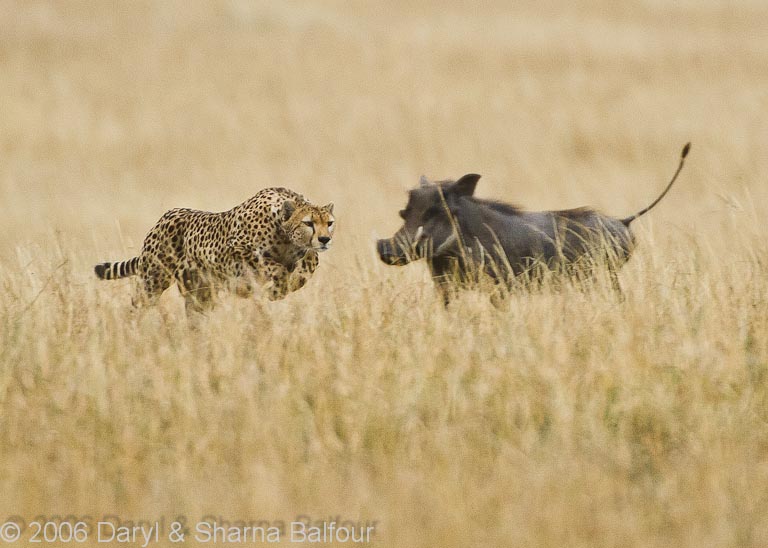
Thanks to the powers of the internet and Facebook I have reconnected with a high school buddy I've not seen for perhaps 40 years! Now firmly resident in the USA, recently Lawrence Baxter brought his seven-year-old son Cormac on his first African safari. Cormac was disappointed he did not get to see cheetah during his stay...so these are for Cormac - till next time!
 
 
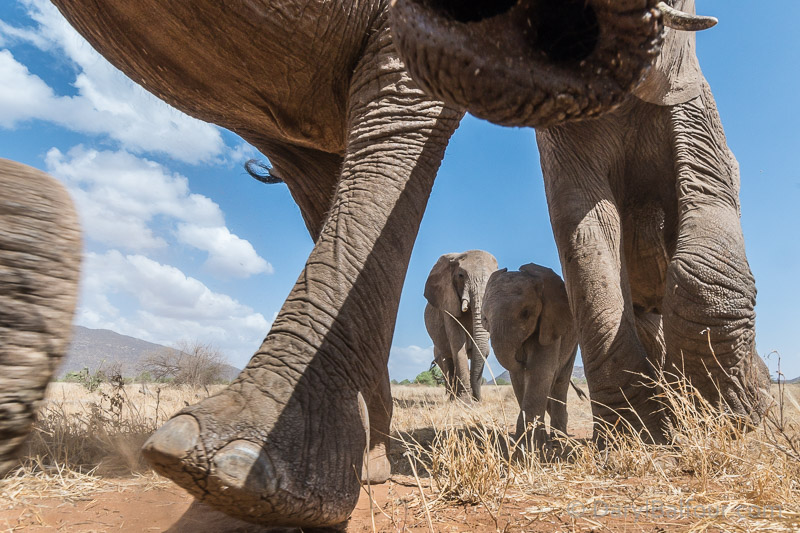
I was in Botswana the past two weeks and decided to have some fun with a super-wideangle lens, the Nikon 12-24, and some low angle elephant shots. Here are a few initial results.
 
 
After 25 years as a wildlife photographer, and having always wished to see and photograph a wild elephant birth, my dream finally came true whilst on a safari in Botswana with Stoney & Jan Edwards and their son Tom last December. The poignant moment was made so much more exciting by the fact that we had great light for photography, the elephant chose to drop her baby right in front of us in open country, and the herd interactions and excitement were so moving. It started after we'd had a great morning at Mombo Camp, watching lions, buffalo, leopard and then rhino - four of the Big Five - and then we found a herd of elephants feeding on the floodplains. Big Five in one game drive - amazing.  After watching the herd for a while we were about to move off when I noticed one cow acting a bit strangely. I asked our driver to stop and wait a while and quickly discerned she was about to go into labour.

Picture
The cow first lay down then stood up again, moving quite awkwardly. I noticed a bulge on her flanks, quite high up, but then noticed her rear was swollen. I was almost too scared to say anything, but murmured to my guests - I think she's going to have a baby! At this stage most of the herd was feeding unconcernedly nearby, though one or two younger cow had moved closer. They may have been her daughters. The cow then rumbled a bit, and let out a brief trumpet. The next thing she had turned her back towards us and I could see the beginnings of the amniotic sac protruding from her birth canal. How co-operative and convenient of her to make sure we could see everything!

The actual delivery was very fast - a few seconds and the calf was lying kicking to free itself from the sac on the ground. The mother initially moved away, rumbling excitedly...and the rest of the herd responded immediately, rumbling, trumpeting and rushing to the scene.

Picture
That was when proceedings really became fascinating. I knew of course that elephants are sentient beings and have a great understanding of life and death, much like we humans do. But the way the herd gathered around and formed a protective screen, then started "digging" at the ground with their forefeet to create what I termed a "birthing pit" or perhaps a soft cradle-like sandpit where the calf would find it easier to stand for the first time, and have a soft landing every time it stumbled and fell. Whatever, there was a seemingly conscious decision by all of them to create this soft sand-pit.


Well, we all know that the Maasai Mara in Kenya is something special during the wildebeest migration each year during August - October, but we recently ran a great Big Cats safari in early March, and the place was really alive with these usually elusive animals.

How about 8 different leopards in a week? What about a great cheetah chase and kill? How about 27 lions before breakfast?

Yep, we had them all. The safari was organised with well-known UK wildlife artist Pip McGarry and his wife, along with 10 of their friends and guests. They were in Africa to photograph scenes to paint once back home and everyone must have got a year's worth of work at least. Look out for Pip's soon-to-be-painted hyaena and vultures canvas!

In fact so successful was this trip - and in fact game viewing was perhaps better than during the migration because we were not under pressure to find the river crossings each day - that Pip has already planned another for next year March, and Wildphotos Safaris will also offer a special Big Cats departure. It is bound to be a huge success, so make your enquiry soon.

I will post an album in the Photos pages once I'm through editing!
Picture
Lions roaring at sunrise, mist on their breath.

Picture
Picture
 
 
Picture
THE CAMERAS & PHOTOGRAPHIC EQUIPMENT DARYL & SHARNA USE  

We have used Nikon® cameras and lenses exclusively since 1990. This decision was made based upon our need to embrace the autofocus technology that was becoming increasingly prevalent at that time. Nikon had made the decision to stick with the same bayonet lens they have used forever, thus allowing photographers who already owned Nikon lenses to use the same lenses on the new cameras, albeit without autofocus (AF). For us this was a major incentive, as it allowed us to take advantage of the large number of second-hand Nikon lenses available on the “used” market as photographers upgraded to the newer AF models, or changed to other brands. Nikon has been a major camera brand, and one used & relied upon by professionals the world over, for decades, with the result that there are always good, quality, pro lenses and bodies on the second hand market.

Our decision to “go with Nikon” was a turning point for us in our photographic careers, and one we have never regretted.

We sincerely believe that Nikon as a brand offers photographers the utmost in durability and reliability under harsh conditions – the kind of conditions wildlife photographers must work in to be successful. We work hard, under trying conditions of dust, heat and inhospitable terrain, for many months of each year. We have never molly-coddled our vehicles, our equipment, or ourselves. Our Nikons have never let us down.

In December 1992, when I was trampled by the giant elephant Tshokwane and both my Nikon 8008s cameras were trashed underfoot a 6-ton tusker, the film was retrieved unscathed from both bodies. Despite the destructive attentions of an angry elephant, resulting in both cameras being destroyed beyond repair, neither camera back sprung open nor let in any light. The film from both bodies was unmarred by scratches or any other damage. To us as photographers, for whom the image is the ultimate reward, this was the ultimate accolade for the durability of our Nikon cameras.

Today we use an array of Nikon digital cameras including the D3s, D700 and new D7000, and some of the latest lenses. But our battery of cameras still includes some of the venerable old Nikon classics – the F2 and F3, a totally manual FM2, and the more modern AF film bodies, the F4 and F5. Although we don’t shoot film much anymore – our photo agencies and most publishers insist on digital submissions – we still maintain a freezer full of Fuji® Velvia & Provia emulsions for those special occasions.

When we set off into the field on a wildlife photographing expedition our camera bags contain a selection of Nikon digital bodies, lenses and electronic flash units, along with an array of ancillary accessories such as Gitzo® tripods, Really Right Stuff® and Wimberley® heads, a laptop computer and LaCie® and Epson® hard drives for backups, an array of CF cards by SanDisk® and Lexar® in 4GB, 8GB, 16GB and 32GB capacities and a case full of lesser bits and pieces. We also never travel without beanbags, the most versatile camera/lens support device ever made! We make our own in heavy duty denim with Velcro® closures and can thus fill them with inexpensive beans, rice or even sand or gravel at our destination when travelling abroad.

We have an extensive selection of lenses for all occasions, but the most important lenses in our arsenal are all zooms and we use, extensively, the Nikon 200-400mm f4 AF-S VR, 70-200mm f2,8 AF-S VR II, 24-70mm f2,8 AF-S and 14-24mm f2,8 AF-S, as well as the recently added AF-S VR 28-300mm, a very handy lens. We also make use of the exceptional Nikon 600mm f4 AF-S VR-II, but this is an awkward and bulky piece of equipment and difficult to use under general conditions.